
Blog
Types of Residential Septic Tanks: Concrete, Plastic & Fiberglass Explained
If you own a home or property in Kamloops or the Thompson-Okanagan, your residential septic tank is most likely one of three types:
- Concrete septic tanks
- Plastic (poly) septic tanks
- Fiberglass septic tanks
At The Lux Loo, we work with all three types every week across Kamloops, Merritt, Barriere, Chase, and the surrounding Interior. Knowing which type of residential septic tank you have — and how each one behaves differently — can help you avoid backups, costly repairs, and emergency pump-outs.

1. Concrete Septic Tanks
Concrete septic tanks are the most common type we see on older Kamloops properties. If your home was built before the 1990s, there’s a good chance you have a concrete tank.
Why homeowners have concrete tanks:
- Very strong and long-lasting — we regularly service concrete tanks that are 30–40 years old
- Can handle larger homes and higher daily water use
- Common on older residential properties and some commercial sites
What to watch for:
Concrete tanks can crack over time if the ground shifts or if maintenance is ignored. Kamloops’s freeze-thaw cycles put particular stress on concrete — frost heave can cause hairline fractures that worsen over time and allow groundwater to infiltrate the tank.
The good news: a concrete residential septic tank that’s been pumped and inspected regularly can last 40–50 years or more. Neglected, it can fail in half that time.
Maintenance priority: High. Concrete tanks should be inspected for cracking every time they’re pumped.
2. Plastic (Poly) Septic Tanks
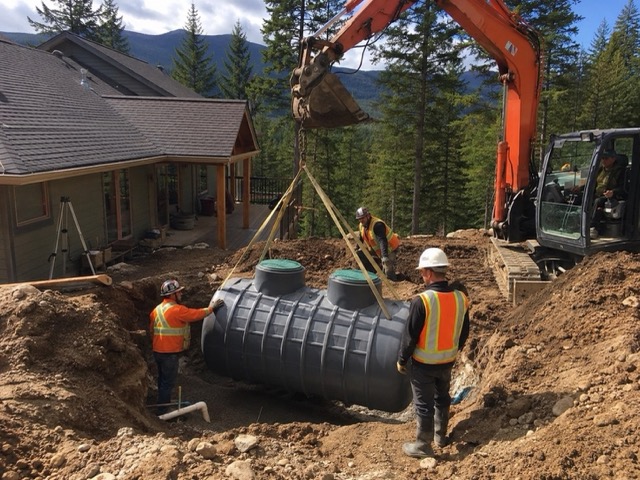
Plastic septic tanks are lighter, more affordable, and increasingly common in newer residential installations across Kamloops and the BC Interior.
Why plastic tanks are popular:
- Easier and faster to install — lower labour costs
- Do not rust or corrode
- More affordable upfront for many homeowners
- Resistant to the chemical reactions that can degrade concrete over time
Important installation note:
Because they are lightweight, plastic tanks must be anchored correctly during installation. In wet soil conditions — which occur seasonally in parts of the Thompson-Okanagan — a poorly anchored plastic tank can shift or float, causing serious damage to the inlet and outlet pipes.
Plastic tanks work well for single-family residential properties but are rarely recommended for commercial use or high-volume applications.
3. Fiberglass Septic Tanks
Fiberglass tanks offer a balance between the durability of concrete and the lighter weight of plastic. They’re less common than the other two types but increasingly chosen for challenging BC Interior sites.
Benefits of fiberglass tanks:
- Strong and resistant to cracking — handles ground movement better than concrete in some conditions
- Smooth interior surface reduces buildup and makes pumping more effective
- Long lifespan when maintained properly
- Lighter than concrete, making transport and installation easier on difficult terrain
When fiberglass makes sense:
These tanks are often chosen when soil conditions are challenging — rocky terrain, clay-heavy soils, or sites with limited access — or when homeowners want a durable, lower-maintenance option for a rural acreage.
Side-by-Side Comparison: Which Residential Septic Tank Type Is Best?
| Concrete | Plastic (Poly) | Fiberglass | |
|---|---|---|---|
| Lifespan | 40–50+ years | 30–40 years | 30–40+ years |
| Weight | Heavy | Light | Medium |
| Cost | Mid-high | Lower | Mid |
| Cracking risk | Moderate (freeze-thaw) | Low | Low |
| Floating risk | None | Higher in wet soil | Low |
| Best for | Older/larger homes | New residential builds | Challenging terrain |
| Common in Kamloops? | Very common | Common (newer builds) | Less common |
The honest answer: no single type is universally “best.” The right residential septic tank depends on your property size, soil conditions, age of the home, and daily water use. According to HealthLink BC’s guide on onsite sewage systems, all sewage systems require ongoing maintenance regardless of tank type — and in BC, all new installations must be designed by an Authorized Person registered with Interior Health.
What Happens When the Wrong Septic Tank Type Is Chosen?
We’ve seen cases where a mismatch between tank type and site conditions caused:
- Tanks shifting or floating after wet winters
- Frequent backups from undersized or incorrectly anchored systems
- Premature cracking and groundwater infiltration
- Shortened system lifespan requiring expensive replacement
In most situations, these problems could have been avoided with proper design upfront and regular professional septic pumping and inspection before serious damage occurred.
Septic Tank Maintenance: What Matters Most for All Three Types
No matter which type of residential septic tank you have, how you use your system matters more than the tank material.
Pumping schedule by household size:
- 5 household users: pump every 2 years
- 2 household users: pump every 5 years
Actual pumping frequency depends on daily water use, toilet paper usage, and what gets flushed. If you’re unsure how often your system should be serviced, our guide on how often you should pump your septic tank breaks it down clearly by household size and system type.
Our best advice for Kamloops homeowners — regardless of tank type:
- Only flush human waste and approved toilet paper
- Never flush wipes, paper towels, or hygiene products
- Avoid doing many loads of laundry in one day
- Limit long, back-to-back showers
- Avoid bleach and bacteria-killing chemicals
- Have your system inspected every few years
- Clean your septic filter twice per year if equipped
For a full breakdown of what not to put down your drains, read our complete guide on what not to flush with a septic system — it covers the products that cause the most damage in Kamloops-area tanks.
Which Septic Tank Type Is Right for Your Kamloops Property?
The best residential septic tank for your property depends on:
- Property size and daily water use
- Soil conditions (clay, rock, drainage capacity)
- Residential or commercial use
- Age of the home and existing infrastructure
- Budget and installation access
Under BC’s Sewerage System Regulation administered by Interior Health, all new septic system installations must be designed and filed by an Authorized Person — either a Registered Onsite Wastewater Practitioner or a professional engineer. This ensures the right tank type and size is matched to your specific site conditions.
At The Lux Loo, we don’t just pump tanks — we help protect residential septic systems across Kamloops and the Thompson-Okanagan. If you need help with inspections, maintenance, or professional septic services in Kamloops, our team is here to help.
Frequently Asked Questions: Types of Septic Tanks
What are the three types of septic tanks?
The three main types of residential septic tanks are concrete, plastic (poly), and fiberglass. Concrete is the most common in older Kamloops properties, plastic is popular in newer residential installations, and fiberglass is often chosen for challenging terrain or soil conditions.
What is the most common residential septic tank in Kamloops?
Concrete septic tanks are the most common type we service in Kamloops, particularly on properties built before the 1990s. Newer residential builds more commonly use plastic (poly) tanks due to lower installation costs and faster setup.
How long does a residential septic tank last?
Concrete tanks can last 40–50 years or more with proper maintenance. Plastic and fiberglass tanks typically last 30–40 years. Regular pumping and inspection are the single biggest factors in extending any septic tank’s lifespan.
Which type of septic tank is best for a Kamloops home?
It depends on your property. Concrete is durable and proven for older and larger homes. Plastic is cost-effective for new residential builds on stable soil. Fiberglass suits challenging terrain or sites where ground movement is a concern. A Registered Onsite Wastewater Practitioner can assess your specific site and recommend the right option.
Does The Lux Loo service all three types of septic tanks in Kamloops?
Yes. The Lux Loo pumps and services concrete, plastic, and fiberglass residential septic tanks across Kamloops, Merritt, Barriere, Salmon Arm, Vernon, Kelowna, and the surrounding BC Interior. Contact us for a quote.