
What Can and Can’t You Flush with a Septic System? A Kamloops Homeowner’s Guide
 Key Takeaways
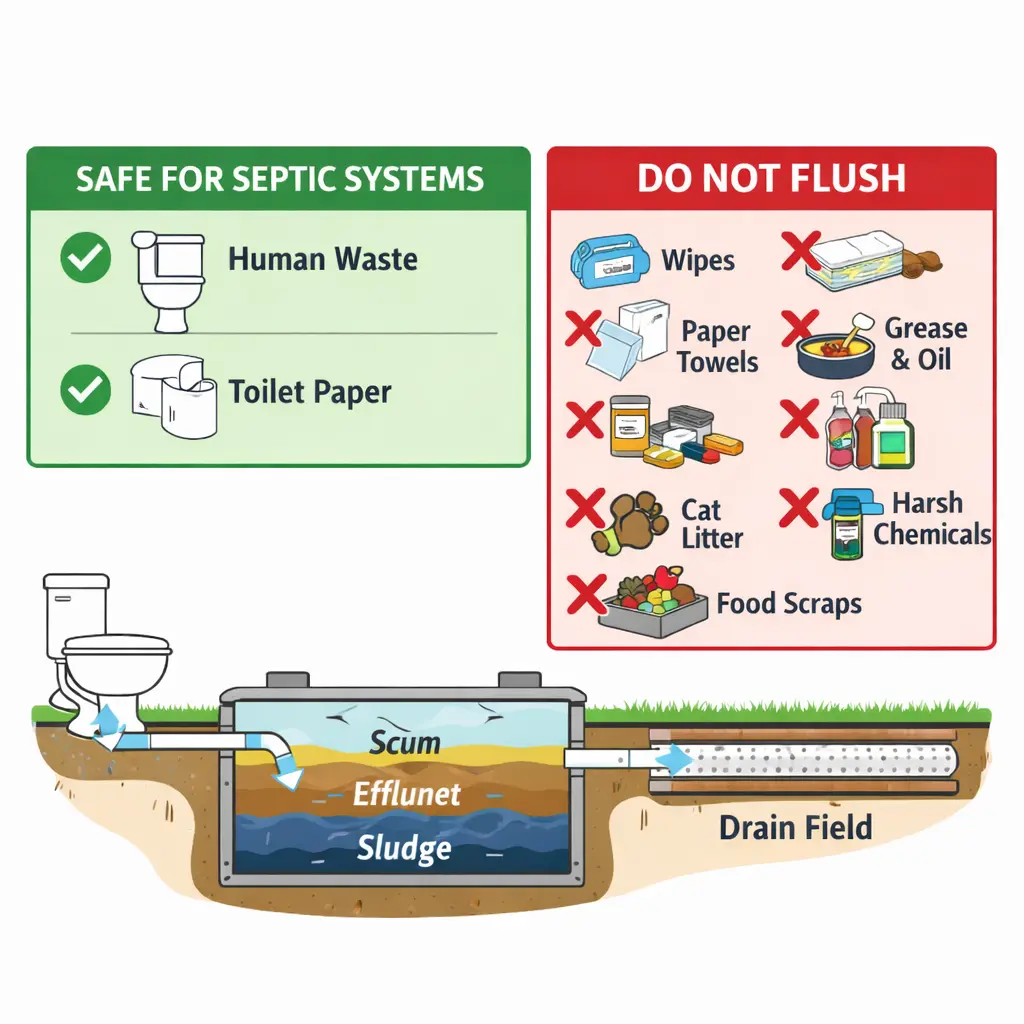
- The only things that should go down a septic-connected toilet are human waste and toilet paper — full stop.
- “Flushable” wipes are one of the most damaging products for septic systems, regardless of what the packaging says.
- Grease, harsh chemicals, and medications can kill the beneficial bacteria your septic tank depends on to function.
- BC’s Interior climate — including Kamloops’s freeze-thaw cycles — puts extra stress on systems that aren’t properly maintained.
- A clogged or overwhelmed septic system can result in a failed drain field, which costs tens of thousands of dollars to replace.
If your home is on a septic system, you’re managing a small-scale wastewater treatment plant in your own backyard. Most people don’t think of it that way — and that’s exactly how problems start. Knowing what not to flush with a septic system is one of the simplest things you can do to protect a system that, if it fails, could cost you $20,000 or more to replace.
At The Lux Loo, we’ve pumped and serviced hundreds of septic tanks across Kamloops, Merritt, Chase, Barriere, and throughout the Thompson-Okanagan. We’ve seen what goes wrong — and we’ve pulled some genuinely baffling things out of tanks that were never supposed to be there. This guide cuts through the noise and gives you the real picture, specific to BC and the Interior.
The Only Two Things That Should Ever Go Down Your Septic Toilet
Let’s start with the short answer: human waste and toilet paper. That’s it. That’s the whole list.
Your septic tank works by separating solids from liquids. Solids sink to the bottom and form sludge. Lighter materials like grease float to the top as scum. The liquid in the middle — called effluent — flows out to your drain field, where the soil filters it naturally. The bacteria living in your tank break down the organic matter over time.
Every single item that isn’t human waste or toilet paper disrupts some part of that process. Either it doesn’t break down (causing blockages), or it kills the bacteria doing the work (causing system failure), or it overwhelms the drain field (causing backups and surface sewage — and no, your neighbours will not be impressed).
In Kamloops and the surrounding Interior, we also deal with harder water, older rural systems, and properties that sometimes don’t get pumped for five or six years. By the time we arrive, the damage from years of flushing the wrong things is obvious. We can pump the tank, but we can’t un-fail a drain field.
Want to understand how your tank type affects what it can handle? Check out our post on what are the three types of septic tanks — it explains why some systems are more vulnerable than others.
 The Worst Offenders: Products That Wreck Septic Systems
Here’s where we get specific. These aren’t vague warnings — these are the products we see causing real problems in tanks across the Thompson-Okanagan.
“Flushable” Wipes
This one deserves its own billboard. Flushable wipes do not break down in a septic system. They pass through your toilet just fine, then sit in your tank — and eventually your pipes — for years. We’ve pulled out clumps of wipes that look nearly new after months in a tank. Health Canada and Environment and Climate Change Canada have both flagged wipes as a major infrastructure problem, and the BC water sector has been dealing with the fallout for years. Don’t flush them.
Grease and Cooking Oil
Pouring grease down the kitchen sink is just as bad as flushing wipes. It coats your pipes, solidifies, and contributes to the scum layer in your tank faster than almost anything else. On a rural Kamloops property where the tank might be a bit older or undersized for the household, grease buildup is a fast track to a backup.
Harsh Chemical Cleaners and Bleach
Your septic tank needs living bacteria to function. Dump enough bleach, drain cleaner, or antibacterial products down the drain and you’ll start killing off those bacteria. The tank doesn’t just smell bad — it stops working. We’re not saying you can’t use any cleaning products, but regular heavy use of harsh chemicals in a septic-connected home will shorten your system’s lifespan.
Medications and Pharmaceuticals
Flushing old medication is a common habit, but it’s a problem for septic systems and for groundwater. The BC Government has a medication return program through most pharmacies — use it instead.
Paper Towels, Napkins, and Tissues
These feel like toilet paper. They are not. They don’t break down the same way and they will accumulate in your tank. Even one or two a week adds up over years.
Cat Litter
Yes, people flush it. No, it should never go near a septic system — even the kinds marketed as “flushable.” Clay-based litters expand with moisture and can cause serious blockages.
Food Waste from a Garburator
If your kitchen sink is connected to your septic system and you’re running a garburator, you’re sending solid food waste directly into your tank. This dramatically increases your sludge buildup and means your tank needs pumping far more frequently. In our experience, garburators and septic systems are a bad combination for Interior BC homes — especially on smaller lots with limited drain field capacity.
Why BC’s Interior Climate Makes This Even More Important
Here’s something that doesn’t get talked about enough: the Kamloops climate is harder on septic systems than most homeowners realize.
We get hot, dry summers and cold winters with significant freeze-thaw cycles. That combination matters because:
- Cold winters slow bacterial activity. Your tank’s bacteria work more slowly when temperatures drop, which means sludge builds up faster in the colder months. If your tank is already stressed from the wrong things being flushed, winter is when you’ll notice it first.
- Dry summers stress drain fields. The soil around Kamloops is often clay-heavy or rocky, which affects how well your drain field absorbs effluent. A drain field that’s already partially clogged from years of grease and wipes can fail completely during a dry Interior summer.
- Seasonal properties add complexity. We service a lot of cabins and recreational properties around Shuswap Lake, Merritt, and the South Thompson corridor. These systems sit dormant for months, then get heavy use when families arrive in summer. Flushing anything that doesn’t break down quickly causes disproportionate damage in these systems.
We pumped a tank last summer on a rural acreage near Barriere where the homeowners had been using a popular “septic-safe” toilet cleaner tablet for years. The bacterial culture in the tank was essentially dead. The drain field was showing early signs of stress. A different product choice over five years would have made all the difference. That’s the kind of thing that’s hard to reverse once the damage is done.
What About “Septic-Safe” Products? Here’s Our Honest Take
We get asked about septic-safe products constantly. The honest answer: some are genuinely fine, some are marketing, and a few are actively harmful despite the label.
The safest approach is to look for products that are:
- Free of antibacterial agents (triclosan, in particular)
- Biodegradable and certified by a recognized body (look for NSF or CSA certifications)
- Low-bleach or bleach-free
- Free of phosphates
For toilet paper specifically: single-ply breaks down faster than double or triple-ply in a septic system. If you’ve got an older system or a smaller tank, this actually matters. You don’t have to suffer through rough single-ply forever — just be aware that the ultra-thick premium brands put more strain on your system over time.
Septic additive products (enzymes or bacteria you add to the tank) are popular, but the evidence for most of them is mixed. A healthy, properly maintained tank already has the bacteria it needs. The better investment is regular pumping. For most Kamloops-area households, that means every 3 to 5 years depending on household size and usage — not every decade, which is what we sometimes find when we’re called in after a backup.
For a full breakdown of what routine maintenance actually looks like — and how often you really need it — read our guide on what maintenance does a septic system need. It covers pump-out schedules, inspection intervals, and what to watch for between service calls.
Signs Your Septic System Is Already Stressed
Sometimes the damage is already starting. Here’s what to watch for:
- Slow drains throughout the house — not just one sink, but multiple fixtures draining slowly at the same time
- Gurgling sounds from toilets or drains — especially after flushing
- Odours near the drain field or inside the home — a healthy septic system should be nearly odour-free
- Unusually green or lush grass over the drain field — this sounds pleasant but it usually means effluent is surfacing
- Sewage backup in the lowest fixtures in your home — this is the emergency version. Call immediately.
If you’re seeing any of these signs, don’t wait. A pump-out and inspection now is far cheaper than a drain field repair later. Our septic tank pumping and cleaning service covers Kamloops and the broader Thompson-Okanagan region — we can usually get to you quickly, and we’ll give you a straight answer about what we find.
Conclusion
Your septic system is doing quiet, essential work every single day. It doesn’t ask for much — just that you treat it like the wastewater treatment system it actually is, not a magic disappearing machine. Keep the wrong things out of it, get it pumped on schedule, and it’ll serve your home reliably for decades.
The short list: flush only human waste and toilet paper. Skip the wipes, the grease, the chemicals, and the garburator scraps. Be honest about how old your system is and when it was last serviced.
And if you’re not sure where things stand with your system — or if you’ve been flushing things you probably shouldn’t have been — we’re not here to judge. We’ve seen it all. We’re just here to help.
Contact The Lux Loo for a free quote on septic tank pumping and cleaning in Kamloops and the Thompson-Okanagan. We make it simple, affordable, and a lot less stressful than you’d expect.

