
Key Takeaways
- A washroom trailer rental at a remote BC venue isn’t plug-and-play — power, water, and site access all need to be sorted before delivery day, not after.
- Most washroom trailers require a 30-amp dedicated power supply. If your venue doesn’t have that, a generator is the solution — and yes, we can talk you through sizing one correctly.
- Water supply is the most commonly underestimated part of remote venue setup. A freshwater tank on-site or a connection within reasonable distance will usually cover you.
- Site access matters more than people expect — a fully loaded washroom trailer needs a firm, reasonably level surface and a clear path to get there. A sloped orchard road in the dark is nobody’s idea of a smooth delivery.
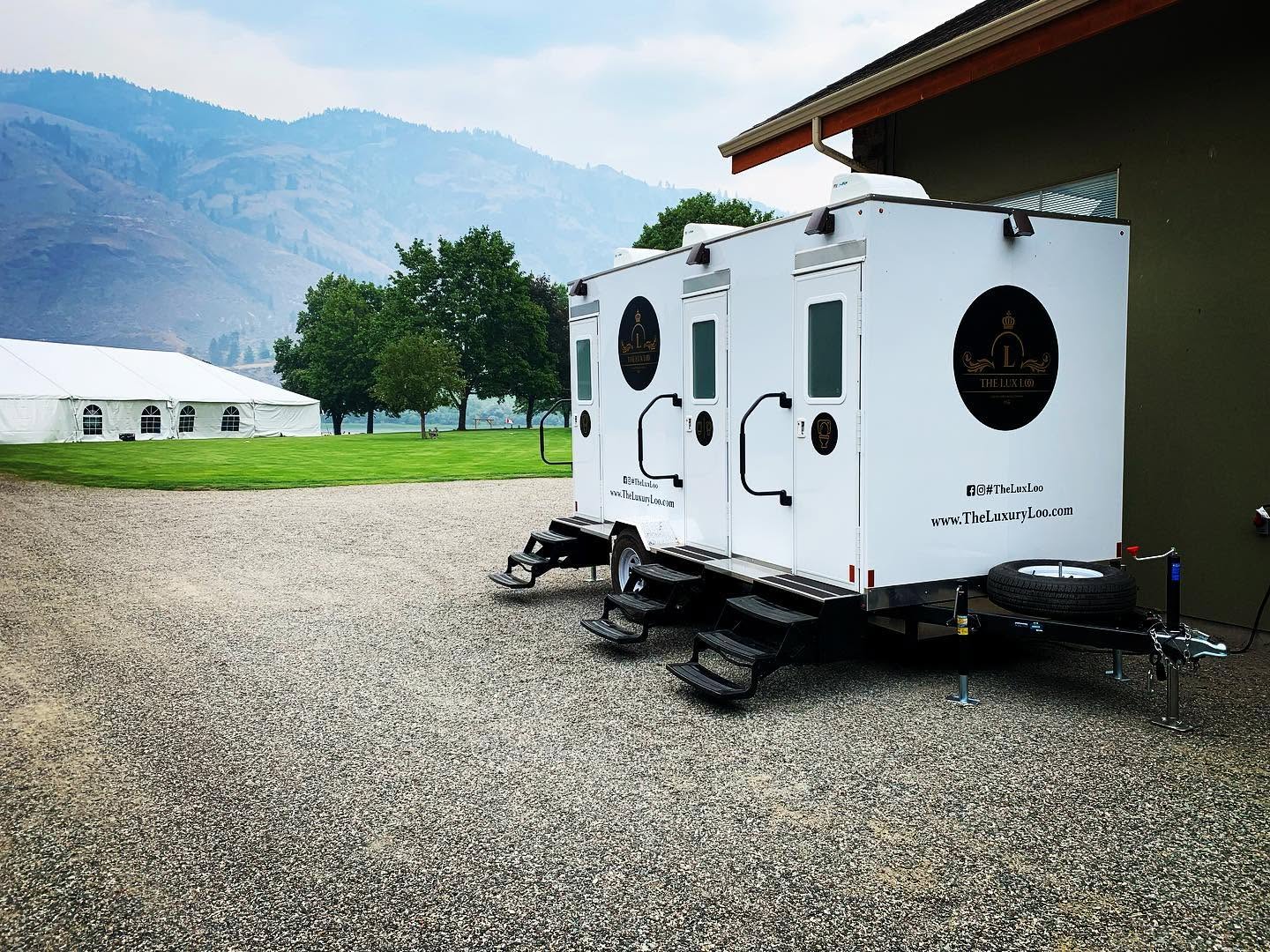
- At The Lux Loo, we’ve delivered washroom trailers to remote ranches, vineyard fields, lakefront properties, and backcountry event sites across the Thompson-Okanagan. We know what works out here — and we’ll tell you honestly if something won’t.
Introduction
If you’re planning an event at a remote BC venue — a vineyard outside Oliver, a ranch property near Merritt, a lakeside property off a gravel road north of Kamloops — you’ve probably already figured out that a washroom trailer rental at a remote venue in BC isn’t as simple as calling a company and pointing at a spot on a map. There are real logistical requirements that need to be sorted ahead of time. Power, water, waste, and access. Get those four things right and your guests will never know there wasn’t a building involved. Get them wrong and you’ll be fielding complaints before the first toast.
We’ve delivered washroom trailer rentals to some genuinely interesting locations across the Thompson-Okanagan — a working cattle ranch with a generator and zero cell service, a heritage property in the Similkameen with a driveway that could charitably be called “narrow,” and more than a few winery events where “the parking area” turned out to be a recently mowed field. This post walks you through exactly what you need to have ready before your trailer arrives, so nothing falls apart the day of your event.
Power: What Your Washroom Trailer Actually Needs
This is the question we get most often, and the answer is pretty consistent: most washroom trailers require a 30-amp, 120/240V power supply with a dedicated circuit. That’s what runs the lighting, the water pump, the climate control, and the flush systems. It’s not a massive draw, but it does need to be consistent and dedicated — meaning you can’t just run an extension cord from the barn and call it a day.
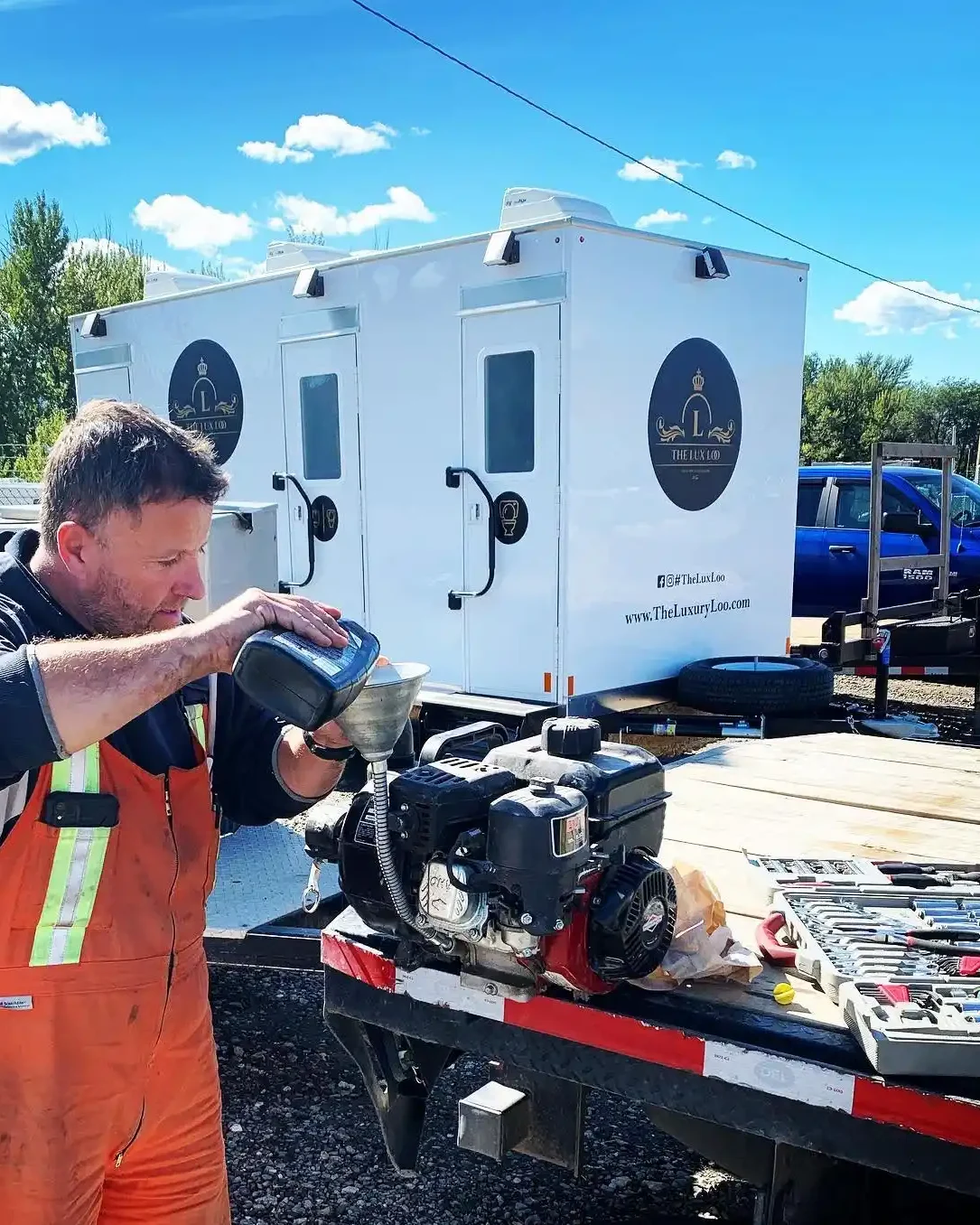
If your venue has an electrical panel with available 30-amp capacity, great. We’ll confirm the hookup specs when we do a site consult. If your venue is a field with no existing power infrastructure — which describes a surprising number of beautiful BC event spaces — you’ll need a generator. A 3,500 to 5,000-watt generator is typically sufficient for a single washroom trailer unit. Go bigger if you’re running multiple units or combining with other electrical draws on site.
Fuel type matters too. A propane generator tends to be quieter and more reliable in the temperature swings you get in the BC Interior — and anyone who’s hosted a September event in the Thompson-Okanagan knows those swings are real. We don’t supply generators ourselves, but we work with clients regularly who source them locally, and we’re happy to point you toward what you’ll need based on your specific trailer spec.
One thing we’ve learned from experience: don’t leave the generator conversation for the week before your event. Rental inventory moves fast in summer across the Interior.
Water Supply: Fresh In, Waste Out
Water is where remote venue planning either comes together or completely falls apart. Your washroom trailer needs two things: a fresh water source to fill the onboard tank, and a plan for waste.
Fresh water: Most washroom trailers have an onboard freshwater tank — typically 100 to 200 gallons depending on the unit. For a four-hour event with moderate guest traffic, that’s usually sufficient on its own. For longer events or higher guest counts, you’ll want either a water source we can connect to on site (a standard garden hose bib works), or a plan to have the tank topped up partway through the event. If your venue has a well with a pressure tank and working hose connection, you’re in good shape. If it’s a raw land site with nothing, we’ll work with you on a tank solution.
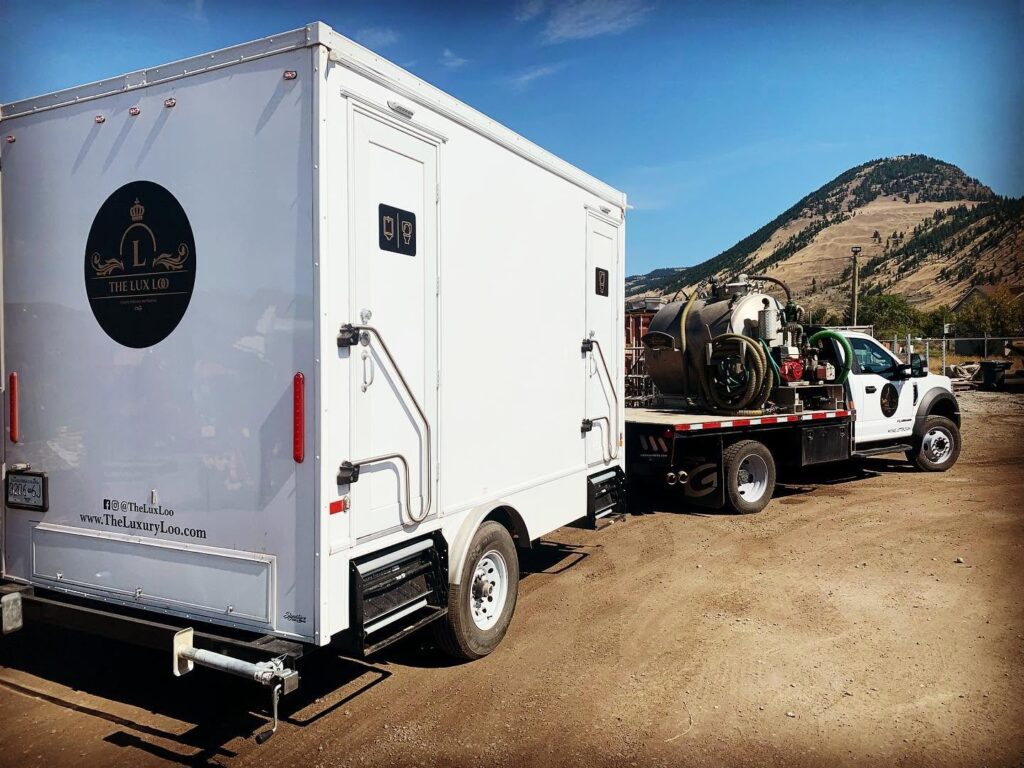
Waste: This is the part people don’t love to think about, but it matters. Washroom trailers use holding tanks for waste, not direct-to-septic connections (unless we’ve specifically arranged for that at your site). After your event, the holding tank gets pumped out by our service team. For most single-day events this isn’t an issue — we schedule the pump-out as part of the service. For multi-day events or festivals, we’ll discuss pump-out frequency as part of your booking. It’s the same principle covered in our post on how often septic tanks need to be pumped — volume and usage determine the schedule, not a one-size-fits-all rule.
BC Interior summer heat is also worth flagging here. A holding tank in 35-degree weather behaves differently than one in mild coastal temperatures. We account for that in how we set up and service units during peak summer season.
Site Access: The Part Everyone Underestimates
Here’s the honest truth about remote venue access: we can get a washroom trailer to a lot of places, but we can’t do it safely if the site isn’t prepared. A fully loaded trailer can weigh several thousand pounds. It needs a stable, reasonably level surface, a clear turning radius for the delivery vehicle, and a route to the placement spot that doesn’t involve low-hanging branches, a creek crossing, or a 15% grade.
We’ve had clients describe their venue as “easy access, just a short drive off the highway” and then send us coordinates for a property that involved a locked gate, a cattle guard, and a lane built for a half-ton — not a tandem axle trailer. We’re not complaining, because we’ve figured out most of these situations. But it adds time, changes what equipment we can bring, and occasionally means a site visit is necessary before we confirm delivery.
What we need to know before delivery:
- Is the access road paved, gravel, or dirt? Has it been maintained recently?
- What’s the clearance height for any overpasses, gates, or tree lines along the route?
- Is the placement area level, or does it need to be graded?
- Is there a turnaround point, or will the delivery truck need to back in?
These aren’t gotcha questions — we ask them because the answers change what we can realistically deliver and how we set it up. If you’re not sure about your site, send us photos and we’ll give you an honest read. We’d rather have that conversation now than at 8am on your event day.
For venues that are planning events regularly, it’s also worth thinking about whether a more permanent setup makes sense. Our post on what BC winery venue owners need to know about washroom trailer rentals covers some of those considerations for recurring-use properties.
Placement, Levelling, and Guest Experience
Where you put the trailer matters almost as much as whether you have one. We’ve seen washroom trailers tucked so far from the event area that guests had to cross a field in heels in the dark. That’s a problem. As a general rule, your washroom trailer should be within easy walking distance of the main event space — close enough to be convenient, far enough that it’s not directly in the sightline of your dinner tables or the ceremony backdrop.
Levelling is non-negotiable. Washroom trailers need to sit level for the plumbing and flush systems to work correctly. Most trailers have adjustable jacks and stabilizers, but they have limits. If your placement surface has significant slope, you may need to have gravel or compacted fill brought in ahead of delivery. This is another good reason to do a site visit or walk the spot before you finalize your layout.
Lighting the path from the event to the washroom trailer is something almost everyone forgets until the sun goes down. Solar stake lights, string lights along a rope barrier, or even a few battery-powered lanterns go a long way. You’d be surprised how much this affects guest perception of the whole setup.
BC’s Interior Health Authority guidance on special events also has requirements around sanitation facilities at public events — including minimum fixture counts and handwashing provisions. If your event requires a permit, it’s worth confirming your washroom plan meets those requirements before you lock in your layout.
Conclusion
Remote venues in the Thompson-Okanagan are some of the most stunning event settings in BC. The logistics that come with them are just part of the deal. Power, water, access, and placement aren’t problems — they’re just things that need to be sorted early, with someone who knows what questions to ask.
At The Lux Loo, we’ve been doing this since 2020 across Kamloops, Vernon, Merritt, the Similkameen, and everywhere in between. We know the terrain, we know the conditions, and we know how to set up a washroom trailer at a remote BC venue so your guests are comfortable and you’re not dealing with a crisis at noon on a Saturday. If you’ve got an event coming up — whether it’s a wedding on a working ranch or a corporate retreat at a lakefront property — give us a call and we’ll walk through the site requirements together. We offer free quotes and honest answers, even if that answer is “here’s what you’ll need to do before we show up.”
Contact The Lux Loo today for a free quote on washroom trailer rentals across the Thompson-Okanagan.