
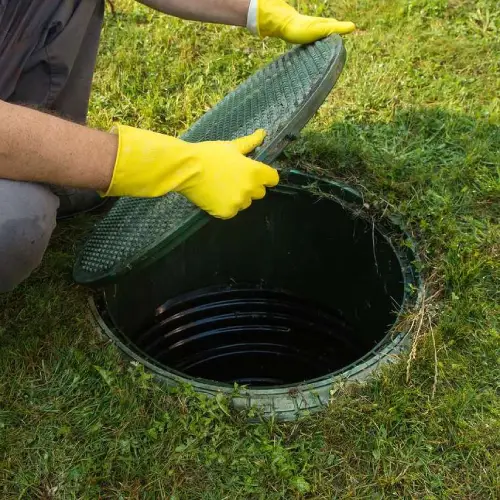
Key Takeaways
- A well-maintained septic system typically lasts 20 to 40 years — but that range is wide, and how you treat the system matters more than its age on paper.
- Tank material is the biggest built-in factor. Concrete tanks routinely outlast older steel tanks by decades.
- The drain field — not the tank — is usually the first part to fail, and it’s the most expensive component to replace.
- BC’s Interior climate and soils put real stress on septic systems. Lifespan in the Thompson-Okanagan isn’t the same as on the coast.
- Regular pumping is the single biggest lever you have. HealthLink BC advises servicing most systems every two to five years, and in our experience that’s what separates a 20-year system from a 40-year one.
If you’re on a septic system in Kamloops or anywhere across the Thompson-Okanagan, the question comes up eventually — usually when you’re buying a home, budgeting for the future, or standing over a tank that’s acting up: how long is this thing actually supposed to last?
The honest answer is that a septic system is less like an appliance with a fixed expiry date and more like a vehicle. Two identical systems installed the same year can be decades apart in condition, entirely because of how they were used and maintained. At The Lux Loo, we’ve pumped and serviced hundreds of tanks across Kamloops, Merritt, Chase, Barriere, and the wider Thompson-Okanagan — everything from 40-year-old concrete tanks still doing their job to far newer systems already in trouble. This guide gives you the real picture, grounded in what we see in the field and what the BC health authorities recommend.
So How Long Does a Septic System Actually Last?
For a typical residential system in our region, here’s the realistic range we see:
- The whole system, well maintained: 20 to 40 years
- The septic tank itself: often the longest-lived component, especially concrete
- The drain field (leach field): commonly the first part to reach end of life, frequently in the 20-to-30-year range
Those are field-experienced ranges, not a stopwatch. We’ve pumped concrete tanks well past the 40-year mark that were structurally sound, and we’ve seen drain fields fail inside 15 years because the system was overloaded and never pumped. The number that matters isn’t the average — it’s what your system’s history and care add up to.
Tank Material: The Biggest Built-In Factor
The material your tank is made of sets the ceiling on how long it can last, before maintenance even enters the picture. Across the Thompson-Okanagan, here’s what we encounter:
Concrete is the workhorse of the region and the longest-lasting. A quality concrete tank that was properly installed and isn’t sitting in aggressive, high-water-table soil can last several decades. Most of the genuinely old tanks we still service are concrete.
Steel tanks are the ones we worry about. Steel corrodes, and once the top or baffles rust out, the tank is done — often around the 15-to-20-year mark. If you’ve bought an older rural property and nobody can tell you what the tank is made of, an inspection is worth it. Rusted-out steel tanks are a genuine safety hazard, not just a performance one.
Plastic and fiberglass tanks are lighter, don’t corrode, and hold up well — but they can be damaged by shifting soil or by anything heavy driving over them. On our rocky Interior lots, installation quality really matters for these.
The material also affects how vulnerable your system is to the other stresses we’ll get into below. If you’re not sure which type you have, our guide to the three types of septic tanks breaks down which system you’re likely working with and why it makes such a difference to lifespan.

The Drain Field Is Usually What Fails First
Here’s the part homeowners are often surprised by: the tank tends to outlast the drain field. The drain field — the network of perforated pipes and gravel where effluent filters into the soil — is where most septic systems actually die.
That’s because a drain field can only absorb so much over its life. Every gallon of water and every bit of solid that shouldn’t be there ages it a little faster. Once a drain field is truly clogged or compacted, it usually can’t be rehabilitated — it has to be replaced. And on the rocky or clay-heavy soils common around Kamloops, replacing a drain field is a significant job and a significant cost.
This is the core reason maintenance pays off. You’re not just keeping the tank clean — you’re protecting the most expensive, hardest-to-replace part of the whole system.
What Actually Shortens a Septic System’s Life
In our experience, systems don’t usually fail early because of bad luck. They fail early because of a handful of preventable things:
- Skipping pump-outs. When solids aren’t removed on schedule, they build up, carry over into the drain field, and shorten its life dramatically.
- Flushing things that don’t belong. Wipes, grease, and harsh chemicals either clog the system or kill the bacteria that make it work. This is the single most common self-inflicted damage we see. (Our full guide on what not to flush covers this in detail.)
- Overloading the system with water. Too much water entering the tank too fast pushes partially treated effluent into the drain field before it’s ready, aging the field.
- Driving or building over the drain field. Compaction crushes the field’s ability to absorb. Don’t park on it, don’t pave it, don’t build on it.
- Root intrusion. Trees planted too close send roots into pipes and the tank.
Catching these problems early is what keeps a small issue from becoming a system-ending one — our guide on the signs your septic tank needs pumping covers exactly what to watch for between service calls.
The encouraging flip side: almost every item on that list is within your control.
What the BC Interior Does to Septic Lifespan
Septic systems here face conditions that genuinely differ from the coast, and it affects how long they last:
Cold winters slow the biology. The bacteria that break down waste work more slowly in cold weather, so solids accumulate faster through our Interior winters. A system that’s already behind on pumping feels this first.
Rocky and clay-heavy soils stress drain fields. A lot of the Thompson-Okanagan sits on soil that doesn’t percolate well. That puts more strain on the drain field over its lifetime and makes eventual replacement more complicated.
Seasonal and recreational properties age unevenly. Cabins around Shuswap Lake, Merritt, and the South Thompson corridor sit dormant for months, then take heavy summer use. That feast-or-famine pattern is hard on a system.
Harder water and older rural systems. Many properties we service haven’t been pumped in five or six years by the time we arrive — and it shows in the numbers we pull out of the tank.
How to Get the Most Years Out of Your System
The good news is that lifespan is largely in your hands. The homeowners whose systems last 35 or 40 years aren’t lucky — they’re consistent. Here’s what that looks like:
- Pump on schedule. HealthLink BC advises that most systems need servicing every two to five years, with the exact interval depending on household size and usage. For most Kamloops-area households that’s every three to five years — not once a decade, which is what we often find after a backup. Staying ahead of it is exactly what our septic tank pumping and cleaning service is built around.
- Protect the drain field. Keep vehicles, structures, and deep-rooted trees off it. It’s the part you most want to preserve.
- Watch your water use. Spread laundry through the week and fix running fixtures. Sudden large volumes of water are hard on the field.
- Keep only the right things going down the drain. Human waste and toilet paper in the toilet; everything else in the bin.
- Keep records. Under BC’s Sewerage System Regulation, homeowners are responsible for maintaining their system, and good records make every future service call — and every future home sale — easier. You can read the province’s overview of homeowner responsibilities on the BC government’s onsite sewage system management page, and HealthLink BC’s guide to maintaining an onsite sewage system is a straightforward starting point.
For a full breakdown of what routine care actually involves — pump-out schedules, inspection intervals, and what to watch for between visits — our septic maintenance guide walks through it step by step.
When It’s Time to Replace
Sometimes a system has simply reached the end of its life, and no amount of pumping will change that. The signs a system is near end of life include recurring backups after the tank has been pumped, effluent surfacing over the drain field, persistent odours, and drains throughout the house that stay slow. A steel tank past 20 years is worth inspecting on principle.
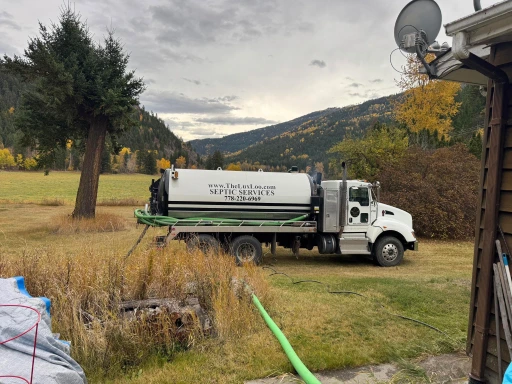
The Bottom Line
A septic system will give you decades of quiet, reliable service — 20 to 40 years is a fair expectation — but only if you treat it like the wastewater system it is rather than a set-and-forget appliance. The tank material sets the ceiling, the drain field usually sets the timeline, and your maintenance habits decide where in that wide range you land.
If you’re not sure how old your system is, what it’s made of, or when it was last serviced, that’s exactly the kind of thing we can tell you. We’ve seen just about everything the Interior can throw at a septic system, and we’ll give you a straight answer about where yours stands.
Contact The Lux Loo today for a free quote on septic tank pumping, cleaning, and inspection in Kamloops and across the Thompson-Okanagan. We make it simple, affordable, and a lot less stressful than you’d expect.