
BC’s Flush Toilet Law for Construction Sites Explained — What Every Kamloops Contractor Actually Needs to Know
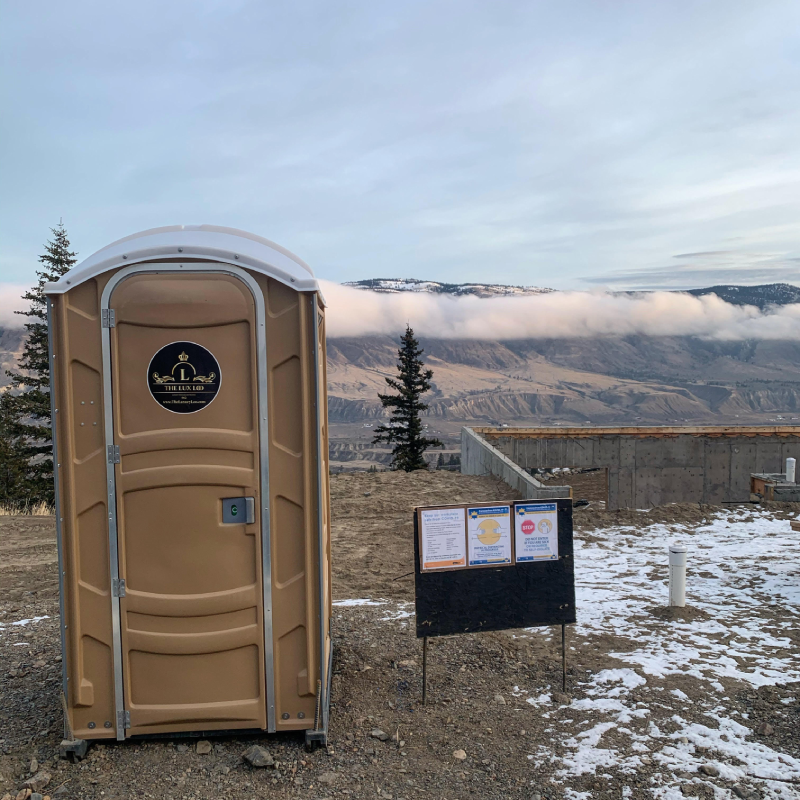
Key Takeaways
- BC law requires flush toilets — not just standard porta potties — on construction sites with 25 or more workers
- WorkSafeBC enforces this under the Occupational Health and Safety Regulation, and fines for non-compliance are real
- Flush units must be lit and properly serviced — a dark, neglected trailer doesn’t count
- Heated flush trailers are the practical solution for Kamloops winters when frozen lines are a genuine concern
- The Lux Loo serves contractors across Kamloops, Merritt, Vernon, and the broader Thompson-Okanagan with compliant jobsite units
If you’re running a construction crew in Kamloops or anywhere else in BC, there’s a regulation you need to have right. Under BC’s Occupational Health and Safety Regulation, any construction site with 25 or more workers is required to provide flush toilets — not just a standard portable unit dropped in the corner of a lot. Flush toilets for construction sites in BC aren’t optional once you hit that threshold. They’re the law.
We’ve delivered and serviced over 1,000 jobsite rentals across the Thompson-Okanagan, and this is one of the things we see contractors get caught off guard by more than almost anything else. A crew grows from 18 to 26 people mid-project, nobody updates the sanitation setup, and suddenly there’s a WorkSafeBC issue. This post breaks down exactly what the regulation says, what it means for your site in practice, and how to stay compliant without overspending.
What the Regulation Actually Says
The relevant rule comes from the WorkSafeBC Occupational Health and Safety Regulation, Part 4. Here’s the plain-language version:
- Sites with fewer than 25 workers: standard portable toilets are acceptable
- Sites with 25 or more workers: you must provide flushing toilet facilities with proper lighting
- The facilities must be maintained in a clean and sanitary condition
- Adequate toilet paper must be provided at all times
“Flushing toilet facilities” means a self-contained flush unit or a washroom trailer with a functioning flush mechanism — not a recirculating chemical unit that technically flushes but doesn’t meet the standard. We’ve seen contractors try to thread that needle. WorkSafeBC inspectors are not impressed.
Lighting is also part of the requirement. A flush trailer that’s not wired or running a generator during early morning starts doesn’t meet the standard. This matters more than you’d think on a Kamloops winter job where crews are starting before sunrise and the sun doesn’t come up until well into the shift.
Why This Catches Kamloops Contractors Off Guard
Here’s a scenario we’ve seen more than once. A contractor starts a commercial project in Kamloops with 18 workers — totally within the standard portable toilet rules. Project grows. Subcontractors come on. By week three, there are 30 people on site. The sanitation setup hasn’t changed. The site is now non-compliant.
WorkSafeBC doesn’t give a lot of warning on this. An inspector walks the site, counts the crew, looks at your facilities, and if you’re running standard porta potties with 28 workers on a Tuesday, you’re getting a notice. In some cases, that means a stop-work order while the issue is corrected. On a tight timeline — and when is a Kamloops construction timeline not tight? — that’s a serious problem.
The fix is simpler than most people think. Talk to your sanitation provider before your crew grows, not after. We work with contractors across the region to set up flush units proactively, often swapping from standard portables to a flush trailer as a project scales up. It’s a quick swap, and it keeps you on the right side of the regulation without any drama.
For a full breakdown of toilet-to-worker ratios at every crew size, check out our guide on how many toilets per person you actually need — it covers jobsite ratios alongside event planning numbers.
What “Compliant” Looks Like in Practice
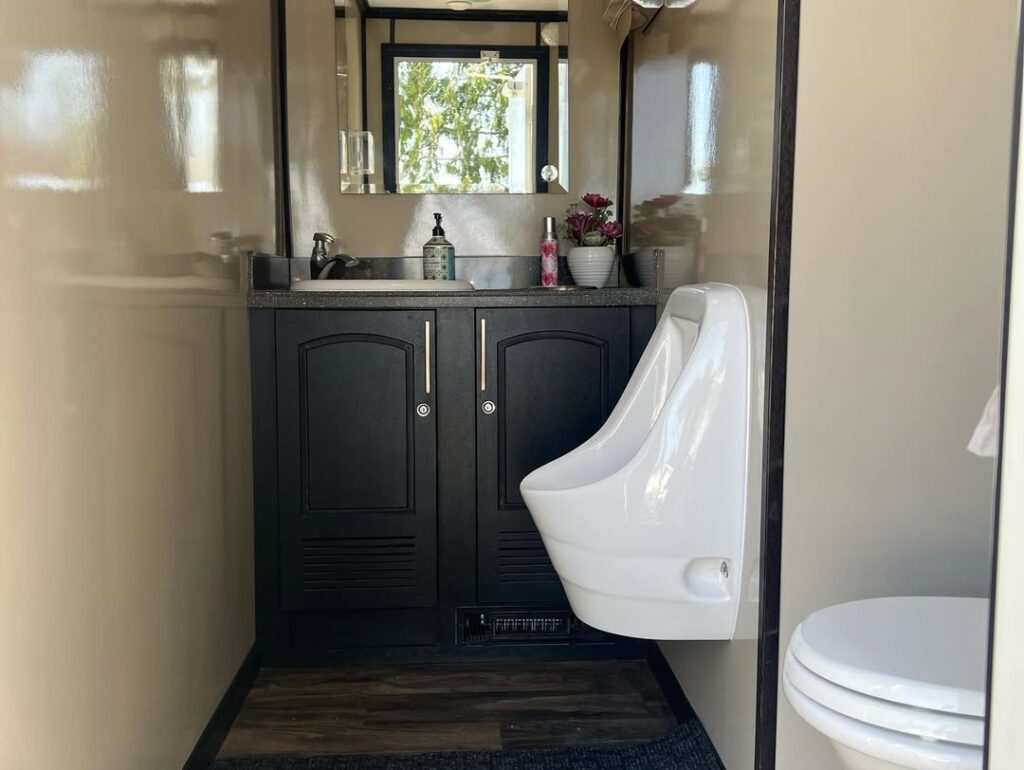
A compliant flush toilet setup for a BC construction site with 25+ workers generally means one of two things: a self-contained flush portable unit connected to a holding tank, or a towable washroom trailer with a proper flush system, running water, and integrated lighting.
At The Lux Loo, we recommend washroom trailers for most sites hitting the 25-worker threshold. Here’s why:
- They include lighting as standard — no extra wiring needed
- Running water means workers can wash their hands, which matters for both hygiene and crew morale
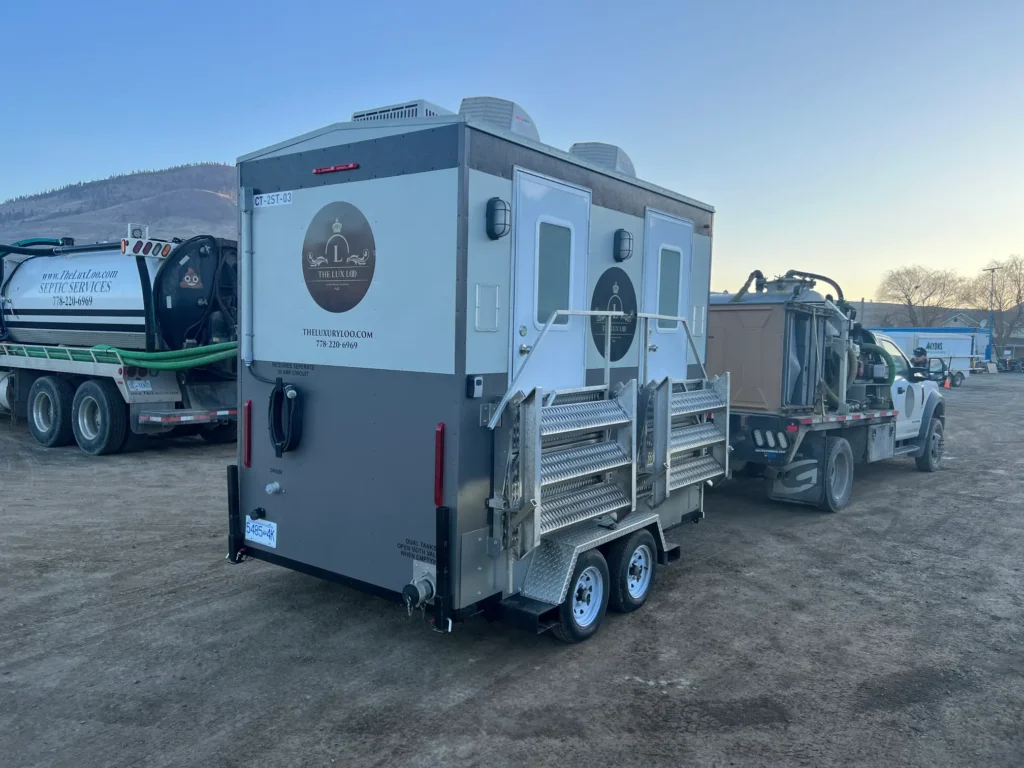
- Heated models handle Kamloops winters without frozen lines shutting you down in January
- They’re serviced on a regular schedule, keeping you compliant with the “maintained in a clean condition” part of the regulation
Speaking of servicing — don’t skip it. A flush trailer that hasn’t been pumped in three weeks isn’t compliant either. We service jobsite units across Kamloops and the Thompson-Okanagan on weekly and bi-weekly schedules depending on crew size. For sites with 25 or more workers, weekly servicing is our standard recommendation. It keeps things sanitary and keeps your WorkSafeBC compliance airtight.
You can see everything we offer for job sites at our jobsite toilet rentals page — from single flush units to full trailer setups sized for large crews.
The Winter Problem Nobody Talks About
This is where BC Interior construction sites have a challenge that, say, a Lower Mainland contractor doesn’t face in the same way. Kamloops winters are cold. Not extreme-north cold, but cold enough that water lines in a non-heated flush unit will freeze overnight. A frozen flush unit is a non-functioning flush unit. A non-functioning flush unit is a non-compliant flush unit. You can see how this becomes a problem fast.
Our heated flush trailers solve this directly. They’re insulated and equipped to run in below-zero temperatures — which in Kamloops means anywhere from November through March depending on the year. We’ve had crews running heated trailers on sites near Merritt and the Coquihalla corridor where temperatures regularly drop to -15°C overnight. These units keep functioning. Standard porta potties and non-heated flush units don’t.
The honest reality is that a heated flush trailer costs more per month than a standard portable. But it costs a lot less than a stop-work order, a crew that can’t legally work, and the scramble to get a compliant unit on site in the middle of January. We’ve taken those calls. You don’t want to be making them.
Some contractors we work with switch setups seasonally — heated trailer from November through March, standard flush unit through the warmer months. That’s a smart approach for multi-season projects and keeps costs manageable without cutting compliance corners.
How to Set Up Your Site the Right Way From Day One
Our recommendation: don’t plan your sanitation around where your crew starts. Plan it around where your crew will be at peak. If you’re expecting to go from 15 workers to 30 over the course of a six-week build in Kamloops, set up for 30 from week one or have a clear plan with your provider to swap units when you hit the threshold.
Here’s the simple framework we walk contractors through:
- Count your peak crew size — include subcontractors, not just your direct employees
- If you’re at or near 25, go flush from the start — the cost difference isn’t worth the compliance risk
- Check your season — if you’re starting in October or later in Kamloops, assume you’ll need a heated unit at some point
- Book weekly servicing — it’s part of staying compliant, not an optional add-on
- Keep documentation — know your provider’s service schedule in case a WorkSafeBC inspector asks
We’ve worked with general contractors, civil crews, and residential builders across Kamloops, Vernon, Kelowna, and Merritt. The setups that never have problems are always the ones where the contractor thought about sanitation early, not as an afterthought on day two of a pour.
The Bottom Line
BC’s flush toilet requirement for construction sites isn’t complicated, but it does catch people off guard — usually at the worst possible time. If you’re running 25 or more workers on a site in Kamloops or anywhere in the Thompson-Okanagan, you need flush toilets. Lit, serviced, and functioning. That’s the law, and it’s also just good sense for a crew that’s working hard in BC Interior conditions.
At The Lux Loo, we’ve been handling jobsite sanitation across this region for years. We know what WorkSafeBC expects, we know what Kamloops winters do to unheated units, and we know how to set your site up so compliance is one less thing you’re thinking about.
Give us a call or get in touch online for a free quote on flush toilet rentals for your construction site. We’ll size the setup to your crew, your timeline, and your season — and make sure you’re covered before the inspector shows up.