
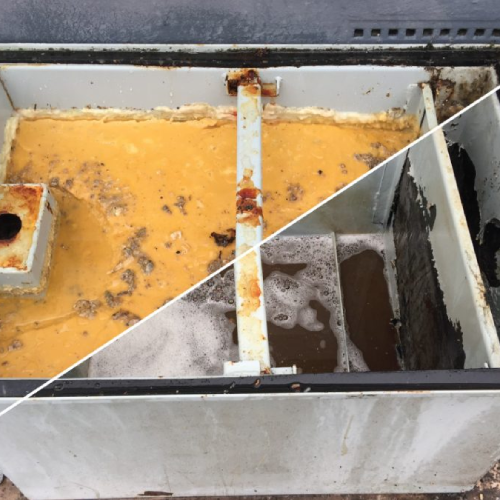
Grease Trap Neglect in Kamloops: The Real Consequences for Your Restaurant
Key Takeaways
- Grease trap neglect consequences in Kamloops range from sewer backups and fines to full restaurant closures ordered by Interior Health.
- A grease trap that’s more than 25% full of FOG (fats, oils, and grease) is already failing — most restaurant owners don’t know this until something goes wrong.
- Sewer bylaw violations in Kamloops can result in fines and mandatory disconnection from the municipal system.
- Pumping your grease trap on a regular schedule costs a fraction of what emergency service, plumbing repairs, or a health inspection failure will run you.
- We’ve seen neglected traps at busy Kamloops restaurants go from “a little slow draining” to “closed for three days” faster than owners expect.
Nobody opens a restaurant thinking about their grease trap. You’re focused on the menu, the staff, the Saturday night rush. The grease trap sits quietly under your commercial sink, doing its job — right up until it isn’t. That’s when the grease trap neglect consequences hit Kamloops restaurant owners hard, and they hit fast. A backup during dinner service. A call from the City. A visit from Interior Health you weren’t expecting. We’ve seen it play out too many times across Kamloops and the Thompson-Okanagan.
At The Lux Loo, we service grease traps for restaurants, food trucks, commercial kitchens, and event venues across the region. This post isn’t meant to scare you — it’s meant to save you a very bad week. Here’s exactly what happens when a grease trap gets ignored, and why the cost of prevention is so much easier to swallow than the alternative.
What a Grease Trap Actually Does (And When It Stops)
Your grease trap — sometimes called a grease interceptor — sits between your kitchen drains and the municipal sewer system. Its job is to slow wastewater down long enough for fats, oils, and grease (FOG) to float to the top and solids to sink to the bottom. The relatively clean water in the middle passes through to the sewer. Simple concept. Critical function.
The problem is that FOG accumulates constantly. Every pan of bacon grease, every fryer load, every sauce-covered dish adds to the buildup. Health Canada and municipal wastewater systems across BC flag FOG discharge as one of the leading causes of sanitary sewer overflows — and for good reason.
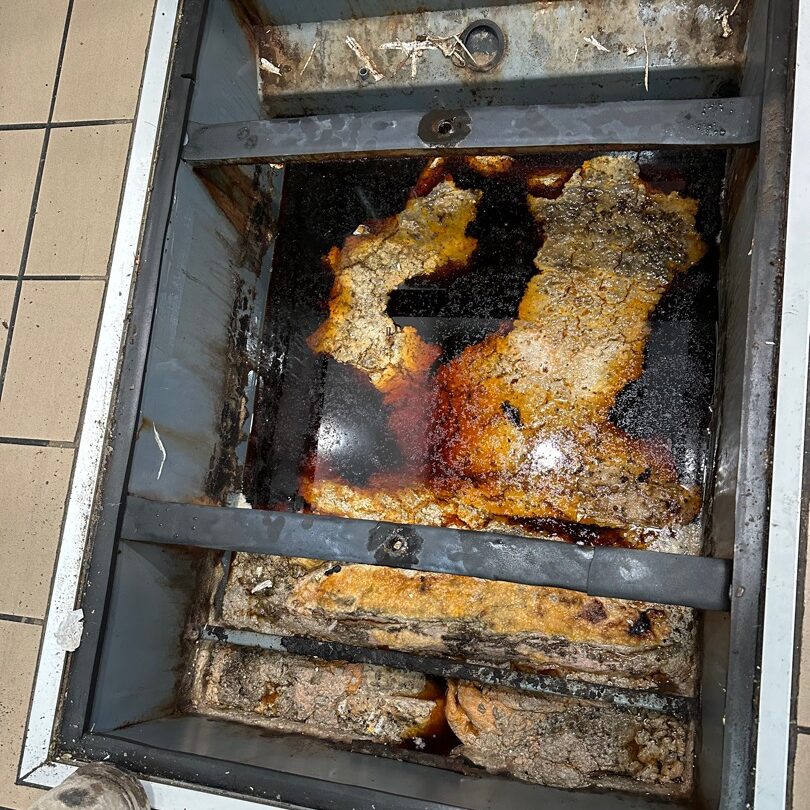
The industry standard — and what we recommend for most Kamloops restaurants — is to pump when your trap reaches the 25% FOG capacity mark. Not 50%. Not “when it starts smelling.” At 25%. Once you’re past that threshold, the trap can’t do its job properly, and you’re effectively bypassing it. Grease starts moving into the sewer line. That’s where the real trouble begins.
The Backup Nobody Wants During a Friday Night Service
Here’s a scenario we’ve seen play out more than once in Kamloops. A busy restaurant — let’s say a pub-style kitchen running 200 covers a night on weekends — hasn’t had their grease trap serviced in eight months. The kitchen staff notice the floor drain is a little slow. The dishwasher seems sluggish. Nobody thinks much of it.
Then on a Friday night, mid-service, the kitchen drain backs up. Raw sewage and FOG pushing back through the floor drain. The kitchen shuts down. Guests get refunded or turned away. A plumber gets called at emergency rates — often $300 to $600 just for the after-hours visit, before any actual work begins. And the grease trap, which was overloaded weeks ago, still needs to be pumped and cleaned before service can resume.
That’s a best-case scenario. The worst case? The backup reaches dining areas, triggers a mandatory inspection, and the restaurant is ordered closed until the system is cleared and assessed. In BC, Interior Health has the authority to shut down any food service establishment that poses a public health risk. A sewage backup in a commercial kitchen qualifies. That’s not us being dramatic — that’s the regulation.
The cleaning that could have prevented all of this? A fraction of what the emergency response costs.
Kamloops Sewer Bylaws and What They Actually Mean for You
The City of Kamloops has clear regulations around what can and can’t be discharged into the municipal sewer system. Restaurants and food service establishments are required to control FOG discharge, and grease traps are the primary mechanism for doing that. Discharging excess grease into the sewer isn’t just bad practice — it can put you in violation of the city’s sewer use bylaw.
Violations can result in written warnings, fines, and in serious or repeat cases, disconnection from the municipal system. Disconnection isn’t theoretical. It happens. And reconnection involves inspections, remediation costs, and bureaucratic timelines that no kitchen owner wants to navigate while their restaurant is sitting dark.
Interior Health inspectors can also flag grease management failures during routine restaurant inspections. If your trap is overdue and it shows up in an inspection report, you’re now on record. A second flag can escalate quickly. You can review Interior Health’s food safety requirements through the Interior Health food safety page — it’s worth a read if you haven’t looked at it recently.
Our honest take after servicing commercial kitchens across the Thompson-Okanagan: most restaurant owners aren’t trying to break the rules. They just don’t have a cleaning schedule in place. That’s the fix. It’s not complicated.

What “Just Skipping One Cleaning” Actually Costs You
We get it. Cash flow in the restaurant business is tight. A grease trap cleaning feels like an easy line item to push to next month. But here’s what “next month” can look like in practice:
- Emergency plumbing call: $300–$800+ depending on timing and severity
- Lost revenue from a kitchen shutdown: Even a half-day closure during peak hours can mean $2,000–$5,000 in lost sales for a mid-sized Kamloops restaurant
- FOG removal from sewer lines: If your grease has migrated into the municipal line, you may be billed for that remediation
- Repeat inspection fees and compliance costs: Time, documentation, possible legal fees
- Reputation damage: Harder to quantify, but a sewage backup story travels fast in a city the size of Kamloops
A routine grease trap pump-out on a regular schedule — quarterly for most mid-volume kitchens, monthly for high-volume operations — costs significantly less than any single item on that list. We work with restaurant owners across Kamloops to set up service schedules that fit their volume, their menu type (a burger joint generates more FOG than a salad bar), and their budget. It’s not one-size-fits-all, and we don’t treat it that way.
You can explore our full grease trap cleaning services to get a sense of what a maintenance plan looks like for a commercial kitchen in this region.
How Often Should a Kamloops Restaurant Actually Pump Their Grease Trap?
This is the question we get most often, and the honest answer is: it depends on your kitchen. But here are the real-world guidelines we use when we’re assessing a new commercial client.
High-volume kitchens (full-service restaurants, hotel kitchens, pub kitchens running 150+ covers a day): monthly pumping is often warranted. These kitchens generate enough FOG to fill a standard trap in four to six weeks.
Mid-volume kitchens (cafes, smaller restaurants, food trucks with permanent locations): quarterly is usually the right interval, though we recommend a check-in after the first service to confirm the accumulation rate.
Lower-volume operations (bakeries, catering prep kitchens, seasonal businesses): every four to six months may be sufficient, but “sufficient” still means scheduled — not “whenever someone remembers.”
One thing we’ve noticed specifically in Kamloops and the surrounding area: the summer season changes the math. Tourism traffic picks up, patio service runs longer hours, and kitchens that normally operate at moderate volume push into high-volume territory for three to four months. If you’re not adjusting your grease trap schedule for July and August, you’re probably overdue by Labour Day. Plan for it now, not after the backup.
Conclusion: The Grease Trap Won’t Wait Forever
Grease traps are one of those things that work quietly in the background — until they don’t. And when they stop working, they make themselves very known, very quickly, at the worst possible time. The grease trap neglect consequences Kamloops restaurant owners face are real: backups, fines, inspection failures, and the kind of revenue loss that stings for months.
The fix isn’t complicated. It’s a service schedule. Set it up, stick to it, and your grease trap will never be the reason you’re turning customers away at the door.
At The Lux Loo, we service grease traps for restaurants, commercial kitchens, food trucks, and event venues across Kamloops, Vernon, Kelowna, Merritt, and the broader Thompson-Okanagan region. We’ll assess your trap, recommend the right pumping frequency for your volume, and keep you compliant — no drama required.
Call The Lux Loo today for a free quote on grease trap cleaning. Your Friday night rush will thank you.
Running a food-focused event or festival in Kamloops? Sanitation planning goes beyond the kitchen. Check out our guide on how many toilets per person you actually need for outdoor events — the numbers might surprise you. And if you’re setting up a multi-day festival or market with a commercial kitchen component, grease trap management and portable washroom planning often go hand in hand. We can help with both.