
Key Takeaways
- A washroom trailer rental at a BC winery isn’t just a convenience — in most cases, it’s a regulatory requirement once your guest count exceeds what your permanent facilities can handle.
- Vineyard terrain is one of the trickiest environments for trailer placement. Access, grade, and ground surface all matter more than most venue owners expect the first time around.
- Interior BC’s summer heat — think 35°C in Oliver or Osoyoos — has a direct impact on how your sanitation setup needs to be managed during a multi-day event.
- Your existing septic system is almost certainly not designed to handle a 200-person wedding or harvest dinner on top of your normal load. Supplementing with a trailer isn’t optional — it’s protection for your infrastructure.
- Booking early matters. Winery season and wedding season overlap almost completely in the Thompson-Okanagan, and quality washroom trailers get reserved fast.
If you operate a winery or vineyard venue in BC’s Interior — whether you’re in the Similkameen Valley, the South Okanagan, somewhere near Kelowna, or out in the Thompson region — you’ve probably figured out that event hosting is its own animal. The tastings, the harvest dinners, the weddings among the vines. It’s a beautiful thing. Until someone asks where the bathroom is and you realize forty guests are sharing the same two-stall washroom your tasting room was built with in 2009.
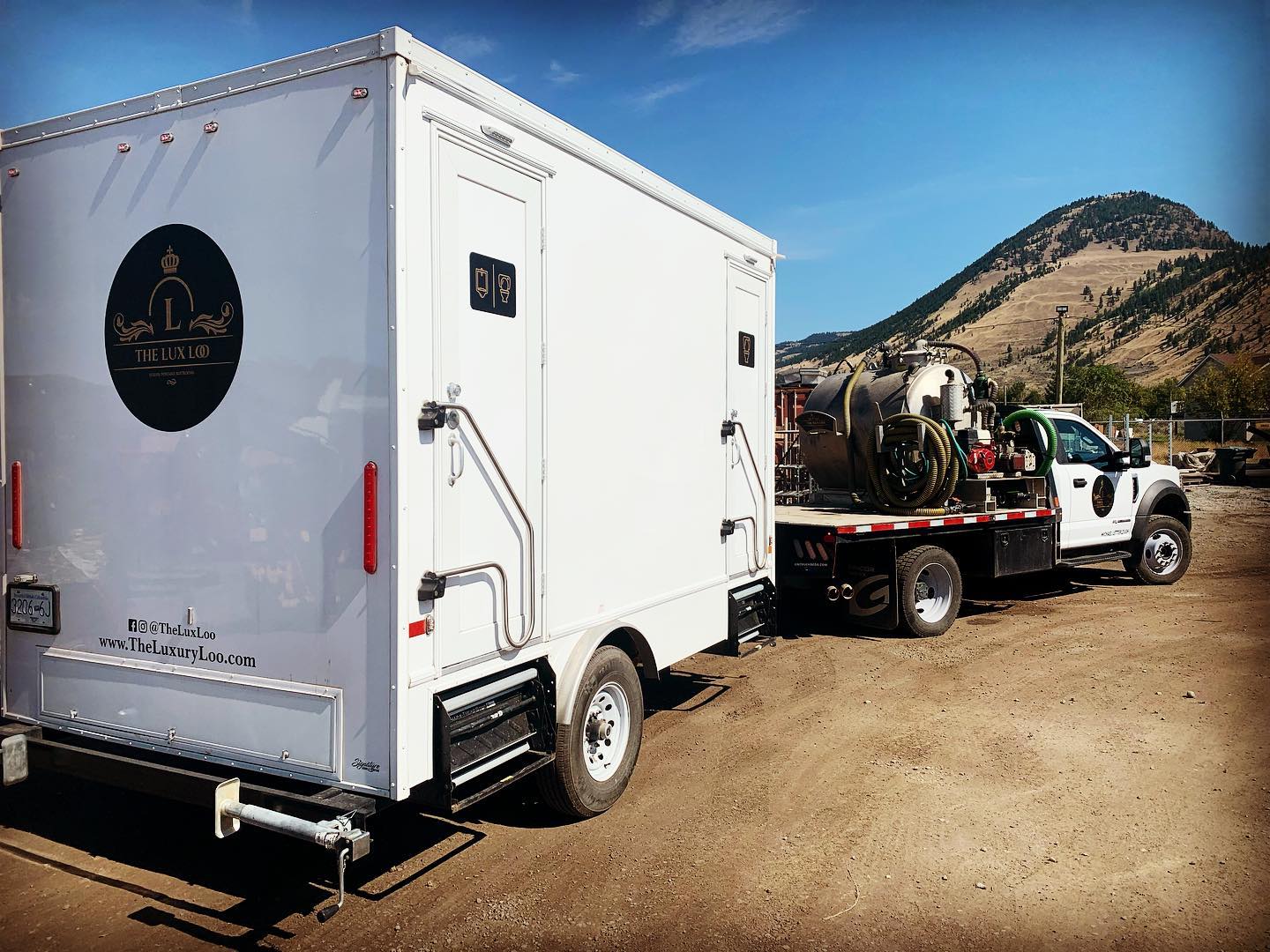
A washroom trailer rental for your BC winery events isn’t a luxury add-on — it’s a practical necessity, and in many cases it’s tied directly to your event permits and Interior Health compliance. At The Lux Loo, we’ve set up trailers at vineyard events across the Thompson-Okanagan and we’ve seen what works, what gets overlooked, and what venue owners wish someone had told them before the first guest arrived. This post is that conversation.
Your Winery Septic System Was Not Designed for Events
This is the part most venue owners learn the hard way, usually mid-summer with a full house and a tank that’s backing up at the worst possible time.
A typical rural winery septic system is sized for the tasting room and the residence — maybe 20 to 30 people on a busy day. That’s what the system was designed and permitted for. When you host a 150-person harvest dinner or a vineyard wedding, you’re pushing five to seven times that load through infrastructure that was never engineered for it. Septic systems don’t have a warning light. They just fail. And a drain field failure at a winery property isn’t a quick fix — it can take the system offline for weeks and cost tens of thousands of dollars to remediate.
Bringing in a washroom trailer for events isn’t a comment on your permanent facilities. It’s how you protect them. We’d rather set up a trailer in your vineyard for a weekend event than get a call from you six weeks later about a drain field that gave out in July. If you want a deeper look at how septic systems hold up under that kind of pressure, our post on how long a septic system lasts in the Thompson-Okanagan walks through exactly what stresses these systems out fastest.
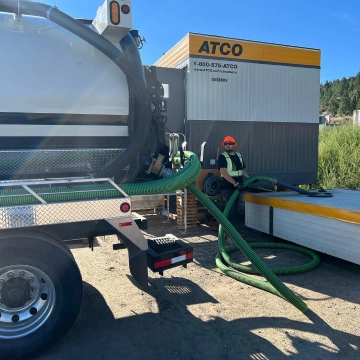
The short version: high-volume, infrequent events are actually harder on a septic system than consistent daily use. Your tank doesn’t flush and recover — it gets hit all at once. A washroom trailer handles that surge load so your permanent system doesn’t have to.
BC Regulations and Interior Health Requirements You Need to Know
Here’s where a lot of winery venue owners get caught flat-footed — not because they’re cutting corners, but because the rules aren’t always spelled out clearly when you’re pulling an event permit.
In BC, temporary sanitation facilities at public events are governed by a combination of provincial health regulations and your local health authority’s requirements. Interior Health, which covers most of the Thompson-Okanagan wine country, requires that events provide adequate toilet facilities based on anticipated attendance and event duration. The Interior Health event planning guidelines are worth reading before you finalize any event permit application — they’re the ones who will be reviewing it.
In practice, this means that if you’re hosting more guests than your permanent facilities can adequately serve, you’re expected to supplement. That’s not a grey area. The ratio guidance Interior Health uses accounts for gender split, event duration, and whether alcohol is being served — which, at a winery, it obviously is. Alcohol service increases washroom usage significantly, and the calculations reflect that.
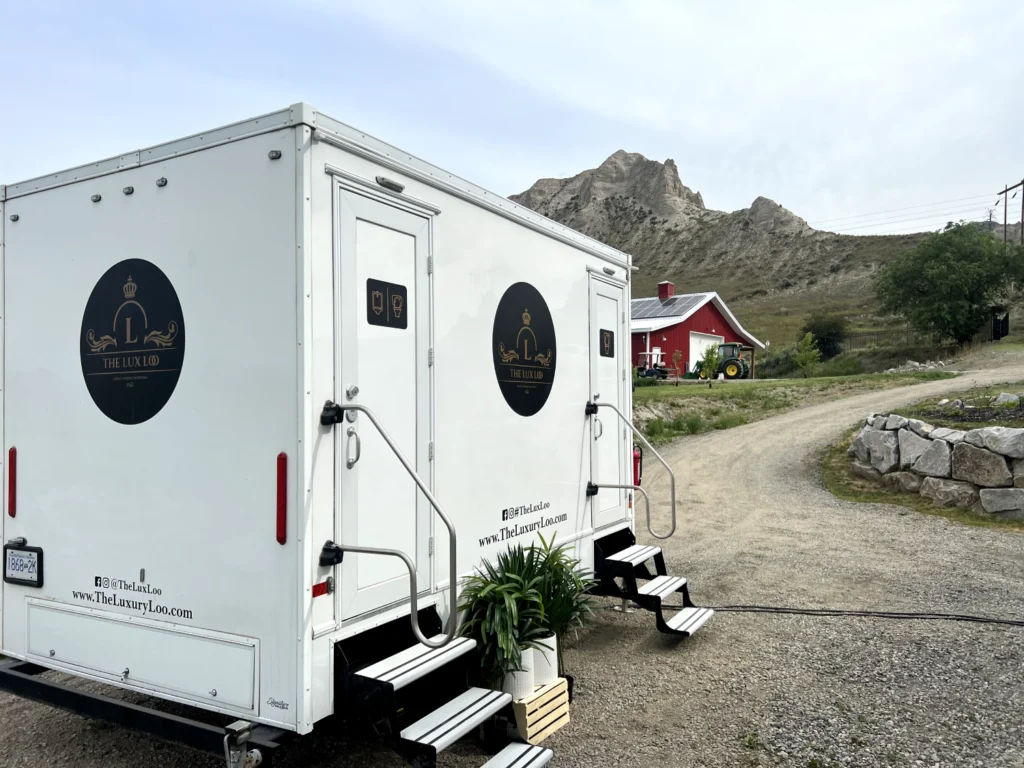
What this means practically: don’t assume your two-stall tasting room washroom plus a porta potty out back is going to pass muster for a 120-person seated dinner. A proper washroom trailer — with separate men’s and women’s sides, running water, and climate control — is the kind of setup that actually satisfies permit requirements and keeps your guests comfortable. Our washroom trailer size guide for BC events breaks down exactly how to figure out the right unit for your guest count.
Placement Is Harder at Vineyards Than Most Venues — Plan for It
We’ve set up washroom trailers at a lot of different venues across the Interior. Golf courses, construction sites, wedding venues, music festivals. And we’ll say this honestly: vineyard terrain is among the trickiest.
Here’s why. Vineyard rows are typically graded for drainage, which sounds helpful until you’re trying to level an 8-metre trailer on a slope that drops two feet over twenty. The ground between rows is often soft after irrigation. There are irrigation lines underground that you absolutely do not want a trailer wheel sitting on. And your guests aren’t going to enjoy a 400-metre walk from the ceremony site to the washroom trailer, so placement near the event space matters — but that space is often right in the middle of your working vineyard.
What we recommend: before you book anything, walk the property with your event layout in mind and identify two or three candidate spots where a trailer could be positioned. Think about vehicle access — our truck needs to be able to pull in to drop off, and potentially service the unit during a multi-day event. Think about sight lines — guests shouldn’t be looking at the trailer from their dinner table, but they should be able to find it easily. And think about power. Our luxury trailers run on generator or shore power, and if shore power is an option at the site, it’s worth running a line.
One Okanagan winery we worked with — a boutique operation near Summerland — called us two days before their harvest dinner because their first vendor had backed out. We were able to make it work, but the placement options were limited by the time we got there. The lesson they took from it: trailer positioning needs to be part of the initial event layout conversation, not an afterthought.
Heat Management in the BC Interior Summer Is a Real Factor
If you’ve run events at a South Okanagan winery in late July or August, you already know what 38°C feels like on a west-facing slope at 4 p.m. Your guests know it too. And your washroom trailer feels it.
This matters for a few reasons. First, a climate-controlled washroom trailer — one with a functioning AC unit — is not a small thing at a summer vineyard event. It’s the difference between guests using the facilities and guests avoiding them, which creates a whole different problem. Our luxury trailer units include climate control specifically because of Interior BC conditions. This isn’t a coastal event where a tent and a breeze handles it.
Second, tank management in heat is different than in moderate weather. Waste breaks down faster in hot conditions, which means odour can become an issue more quickly in a unit that isn’t properly serviced. For a single-day event, this typically isn’t a concern. For a multi-day harvest festival or a weekend glamping-style winery event — which we’re seeing more of across the Okanagan — you need a service plan that accounts for heat. We factor this into how we set up service schedules for summer events at vineyard venues.
The honest experience from our end: we’ve had venue owners tell us they were planning to skip mid-event servicing on a two-day event in August to save money. We pushed back on that, and they were glad we did. In Interior BC summer conditions, that decision would have caught up with them — and with their guests — by late afternoon on day two.
How to Book the Right Washroom Trailer for Your Winery Event
The Thompson-Okanagan wine country has a very compressed event season. June through September is when most vineyard weddings, harvest dinners, winery concerts, and club events happen — and that window overlaps almost exactly with when washroom trailer demand peaks across the entire region. This is not a category where you can make a booking call two weeks out and expect the unit you want to be available.
Our general advice for winery venues planning their event calendar: block your washroom trailer dates when you lock in your event dates, not when you start finalizing other vendor contracts. The venue, the caterer, the photographer — those you can sometimes sort out with reasonable notice. A quality washroom trailer in the middle of Okanagan wine season is a finite resource.
When you’re looking at options, a few things specific to vineyard events are worth asking about:
- Does the unit include a dedicated women’s side? For winery events — especially weddings — it needs to. A single-sided unit or a converted trailer with a shared entry isn’t appropriate for a seated dinner with 100 guests.
- What’s the service plan for multi-day events? Make sure you know what’s included in the base rental and what costs extra.
- Can the vendor access your property to service the unit between event days? This requires a conversation about your access road and any operational timing that might conflict with vendor traffic.
- Is the unit generator-compatible? Shore power isn’t always available at rural vineyard locations.
You can browse our full range of options on our washroom trailer rentals page, or reach out directly if you want to talk through what makes sense for your specific venue and event calendar. We’ve worked with small estate wineries doing intimate harvest dinners and larger venue operations hosting weddings for 200-plus guests — the approach is different for each, and we’re happy to talk it through.
The Bottom Line for BC Winery Venue Owners
Running events at a vineyard venue in the Thompson-Okanagan is genuinely great — the setting sells itself and the food and wine speak for themselves. The sanitation side of it doesn’t need to be complicated, but it does need to be taken seriously. Your permanent septic system isn’t built for event loads. Interior Health has real requirements around temporary sanitation that apply to your events. The terrain and heat of Interior BC create logistics that are different from a standard event venue. And booking windows are tight in wine country season.
Get the washroom trailer booked early, plan the placement before event day, and choose a unit that’s actually equipped for Interior BC summer conditions. That’s the difference between a venue that’s known for exceptional events and one that’s quietly nursing a drain field problem in September.
If you’re planning winery events for this season or building out next year’s calendar, reach out to The Lux Loo for a free quote. We service Kamloops, Kelowna, Vernon, Penticton, Merritt, Oliver, Osoyoos, and everywhere in between. We know the terrain, we know the regulations, and we’ve set up enough trailers in vineyards to know what actually works out here.