
Septic System Inspection in Kamloops: What Every Homebuyer and Seller Needs to Know Before Closing
Key Takeaways
- A septic inspection in Kamloops should happen before subjects are removed — not after you’ve already fallen in love with the property.
- BC’s Interior Health Authority has specific requirements for septic systems, and many older rural properties around Kamloops don’t meet them.
- Sellers who skip a pre-listing inspection often face last-minute negotiating disasters. We’ve seen it firsthand.
- A full inspection includes locating the tank, pumping, visual inspection of components, and a drain field assessment — not just a quick peek at the lid.
- Inspection costs are small. Septic system replacement costs — often $15,000 to $40,000+ in the Kamloops area — are not.
The Real Stakes of a Septic Inspection in Kamloops
Here’s the thing about septic systems: they’re invisible. They sit underground, they do their job quietly, and most homeowners don’t give them a second thought — until suddenly they have to give them every thought.
If you’re buying or selling a property in Kamloops, Chase, Barriere, Logan Lake, or anywhere else in the Thompson-Okanagan where municipal sewer isn’t available, a septic inspection in Kamloops isn’t optional. It’s the single most important step in the transaction that most people skip — and the one that causes the most expensive surprises. We’ve been pumping, inspecting, and servicing septic systems across this region long enough to have seen the same scenario play out dozens of times: deal falls apart at the last minute, or worse, buyer moves in and the system fails six months later.
This guide is written specifically for Kamloops and BC’s Interior — because septic systems here face conditions, regulations, and soil types that are nothing like coastal properties or systems further south. Let’s get into it.
What Does a Septic Inspection Actually Include?
A lot of people assume a septic inspection is someone walking around the yard, finding the tank lid, and saying “yep, looks fine.” That’s not an inspection. That’s a guess.
A proper septic inspection for a real estate transaction in BC should include:
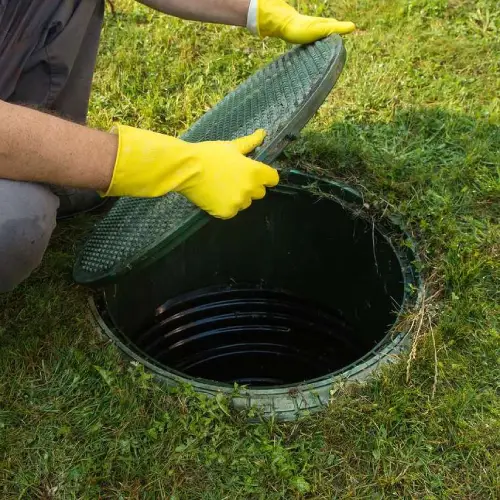
- Locating the tank and access lids — On older rural properties around Kamloops, this alone can take serious digging. Many tanks were installed before digital records existed.
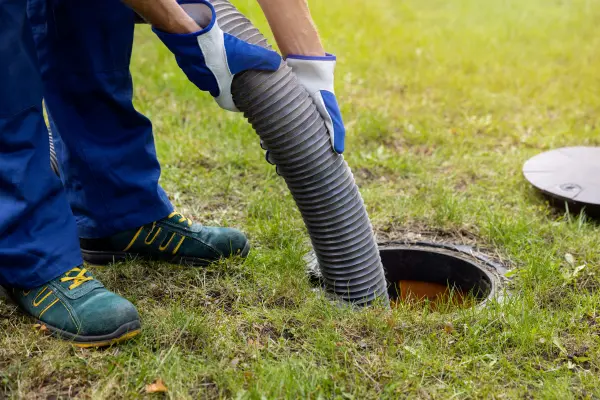
- Pumping the tank — You can’t properly inspect what you can’t see. The tank needs to be emptied to assess its structural condition, baffle integrity, and sludge/scum layer ratios.
- Visual inspection of inlet and outlet baffles — Damaged or missing baffles are one of the most common causes of drain field failure.
- Drain field assessment — Signs of saturation, surfacing effluent, or dead grass patterns (yes, really — overly lush green strips can indicate a leaking field) all matter.
- Distribution box check — If your system has one, this needs to be inspected for cracks and equal flow distribution.
- A written report — If your inspector doesn’t hand you a written report at the end, that’s a red flag.
At The Lux Loo, our septic tank pumping and cleaning service is often the first step in a proper inspection — because without pumping the tank, half the inspection simply can’t happen.
BC Regulations and Interior Health: What Applies to Kamloops Properties
This is where Kamloops-area properties get specific — and where a lot of out-of-province buyers get caught off guard.
In BC, septic systems are regulated under the Sewerage System Regulation (BC Reg. 326/2004), overseen by Interior Health for properties in our region. Interior Health’s environmental health program sets standards for how systems must be designed, installed, and maintained — and properties that pre-date those standards are often grandfathered in, but only until they fail or are expanded.
Here’s what that means practically:
- A system installed in 1978 on a 5-acre lot outside Kamloops may be completely legal as-is — until the home is renovated, expanded, or the system fails. At that point, it must be brought up to current code.
- If you’re buying that property and the system is already stressed or undersized, you could be looking at a full replacement under current regulations — which is far more expensive than simply repairing an older system.
- Holding tanks (sealed tanks with no drain field) are common on some smaller rural lots in our area. They’re legal, but require much more frequent pumping — sometimes every 4–8 weeks depending on household size. Buyers often don’t realize this until they get their first invoice.
Our honest opinion, after servicing hundreds of properties in the Thompson-Okanagan: always pull the permit history before you finalize the purchase. You can request septic system records through the BC government’s sewage management resources or through your local health authority. If there are no records, treat the system as unknown — and inspect accordingly.
A Real Scenario: The Chase Property That Almost Closed Without an Inspection
We were called out to a property near Chase — a lovely four-bedroom home on a few acres that had been on the market for about three weeks. The buyers had already waived most of their subjects and were two days from removing the septic condition when their realtor strongly suggested they get the tank pumped and looked at first.
Good call.
When we pumped the tank, we found the outlet baffle had completely deteriorated — it had likely been gone for years. Raw effluent had been flowing directly into the drain field without proper treatment, and the field was already showing signs of biomat buildup. The distribution box had a hairline crack that was diverting most of the flow to one single trench.
The system wasn’t failed — yet. But it was close. The repair estimate came in just over $8,000. The buyers used that report to renegotiate the purchase price. They got the home, the seller contributed to the repair, and everyone walked away knowing exactly what they were dealing with.
The alternative? Move in, run the dishwasher and the laundry at the same time on a busy weekend, and have sewage surfacing in the backyard by spring. We’ve seen that ending too. It’s worse.
For more on what ongoing septic maintenance looks like once you own the property, our guide on what maintenance a septic system needs is a solid starting point for new homeowners in Kamloops.
Sellers: Why a Pre-Listing Septic Inspection Is Worth Every Penny
Sellers almost never think about this proactively. But they should.
Here’s the math: a pre-listing inspection and pump-out costs a few hundred dollars. A failed inspection discovered by the buyer’s inspector — during the subject removal period, when you have zero negotiating leverage — can knock thousands off your asking price overnight. Or kill the deal entirely.
We’ve seen sellers lose $10,000 to $20,000 in negotiated price reductions because a septic issue came up late in the process. The buyer’s agent gets involved, the buyer gets nervous, and suddenly the seller is in a reactive position. Nobody wins.
If you get a pre-listing inspection done, you have options. You can repair the issue before listing. You can disclose it and price accordingly. You can get multiple quotes and choose the most cost-effective fix. You control the narrative instead of scrambling during subject removal.
It’s also worth knowing what a septic system replacement actually costs in this region before you close. If you’re curious, we broke down the numbers in our post on the price of a septic system in Kamloops — and the numbers might surprise you.
The bottom line: a proactive seller is a confident seller. Don’t let a buried tank derail a deal you’ve been planning for months.
Conclusion: Don’t Let a Buried Tank Become a Buried Surprise
Septic inspections aren’t glamorous. We’ll be the first to admit that. But they are genuinely one of the most important steps in any rural real estate transaction in the Kamloops area — for buyers and sellers.
Get the inspection done early. Get the tank pumped so the inspection is actually thorough. Pull the permit history. Know whether you’re dealing with a conventional system, a holding tank, or something that was installed before modern standards existed. And if you’re unsure what type of system is even on the property, our breakdown of the three types of septic tanks is a good place to start.

At The Lux Loo, we service septic systems across Kamloops, Chase, Barriere, Logan Lake, Merritt, Vernon, and throughout the Thompson-Okanagan. We’ve done this long enough to know what a healthy system looks like — and what a system that’s about to cause someone a very bad week looks like too.
Call The Lux Loo today for a free quote on septic pumping and inspection services. Whether you’re closing in two weeks or just want peace of mind on a system you’ve never had looked at, we’ll give you a straight answer — no upselling, no vague reports, just honest information from people who do this every day.