
Blog
Key Takeaway:
- Most Kamloops restaurants need grease trap cleaning every 1 to 3 months — not once a year
- The “one-quarter rule” is the industry standard: clean when grease and solids fill 25% of the trap’s capacity
- Interior Health has real enforcement teeth — a blocked grease trap can get your kitchen shut down
- High-volume kitchens (think burger joints, fish and chip shops, fryer-heavy operations) clog faster than you’d expect
- Skipping service doesn’t save money. It costs more. Every time.
The Short Answer (Then We’ll Go Deeper)
If you run a restaurant in Kamloops or anywhere in the Thompson-Okanagan, here’s what we see week in and week out when we’re out doing restaurant grease trap cleaning in Kamloops:
- High-volume kitchens (burger spots, pubs, fish and chips): Every 4 to 6 weeks
- Mid-volume kitchens (casual dining, cafés with full menus): Every 6 to 8 weeks
- Lower-volume kitchens (small cafés, limited fryer use): Every 2 to 3 months
The honest answer? It depends on your kitchen. But “I’ll deal with it when it smells bad” is not a cleaning schedule. That’s a crisis plan.
What the One-Quarter Rule Actually Means
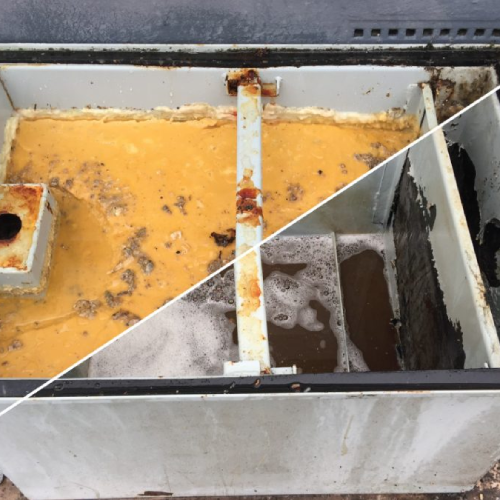
The industry benchmark for grease trap maintenance is called the one-quarter rule: your trap needs to be pumped when the combined depth of floating grease and settled solids reaches 25% of the total liquid depth. Once you hit that mark, the trap stops doing its job effectively and FOG (fats, oils, and grease) starts passing straight into the municipal sewer system.
That’s not just an environmental issue. In BC, discharging grease beyond permitted limits into a municipal sewer system violates local wastewater bylaws. The City of Kamloops, like most Interior BC municipalities, follows sewer use bylaws aligned with provincial guidelines under the BC Environmental Management Act. Violations can mean fines, mandatory remediation, or being ordered to cease operations until you’re compliant.
In plain terms: a clogged grease trap is a health authority problem waiting to happen. Interior Health inspectors do check. We’ve seen it firsthand.
A Real Kamloops Scenario We’ve Seen Too Many Times
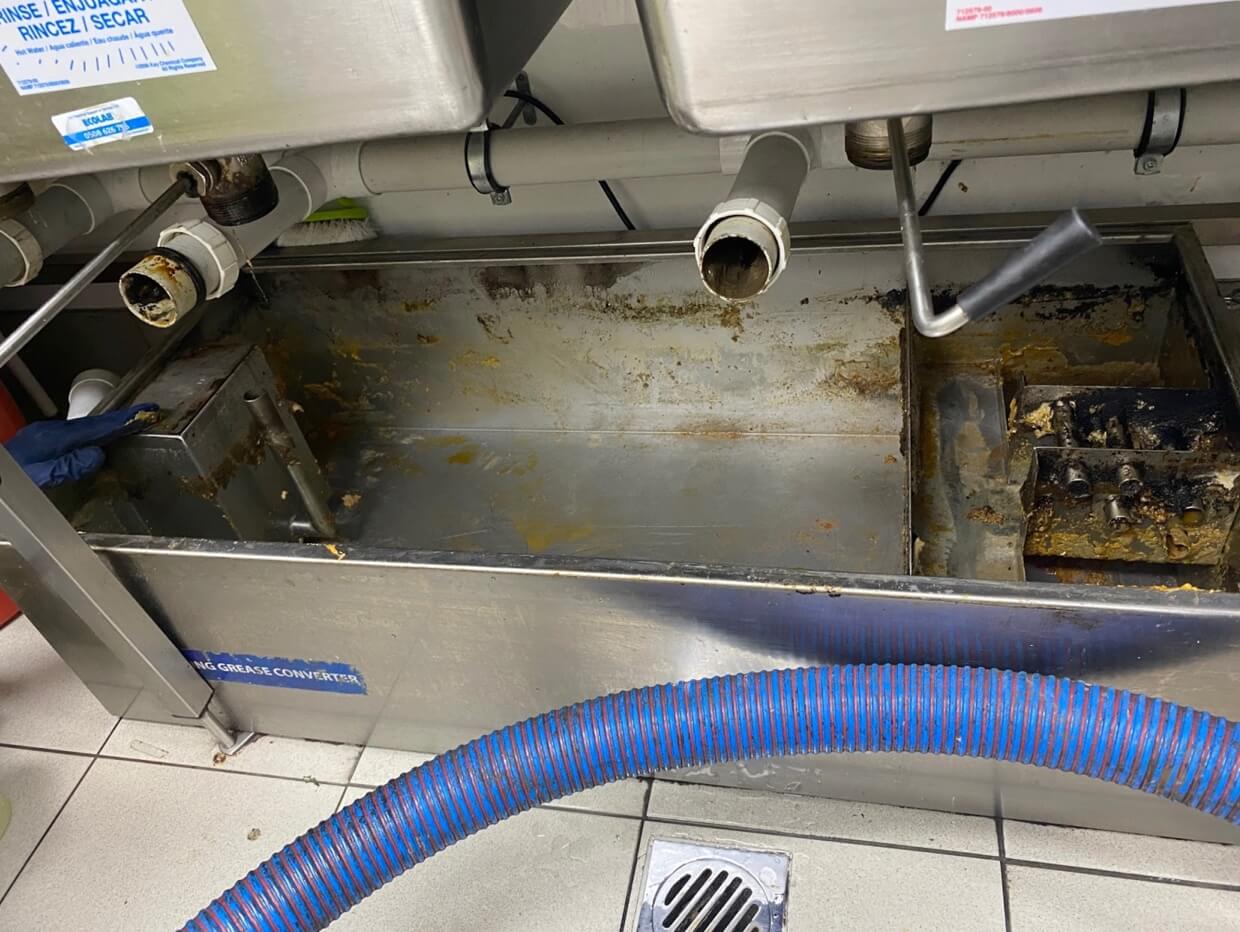
We got a call last summer from a pub-style restaurant on a busy strip in Kamloops. They’d been going about five months between cleanings — “it’s been fine” was the phrase used more than once. When our team pulled the lid off the grease trap, it was past 40% capacity. The baffles were coated. The outlet pipe had a partial blockage. And the smell? Let’s just say the patio guests were getting a bonus sensory experience they hadn’t ordered.
The emergency pump-out, pipe flush, and follow-up service cost them significantly more than three routine cleanings would have. Plus, they were three hours into a Friday lunch service with a drain that wasn’t draining properly. Not ideal.
We got them sorted. But the point is: routine service isn’t an expense. It’s insurance against a much worse day.
If your kitchen runs a deep fryer, a flat-top grill, or serves anything that touches oil — and really, what Kamloops restaurant doesn’t — you need a scheduled service interval, not a reactive one. Our grease trap cleaning service is built exactly for that kind of proactive scheduling.
BC-Specific Factors That Speed Up Your Grease Trap Fill Rate
Kamloops kitchens aren’t the same as kitchens in Vancouver. A few Interior BC realities that affect how fast your grease trap fills up:
Seasonal volume swings. If you’re near a tourist corridor — and plenty of Kamloops restaurants are — your summer volume can double or triple. A cleaning interval that works in January may not cut it in July when you’re turning tables three times a night. We recommend reassessing your schedule at the start of tourist season every year.
Older infrastructure. Many commercial buildings in Kamloops have older plumbing and undersized grease traps that were installed before current kitchen volumes were even imagined. If your trap is small relative to your output, you need more frequent service — full stop.
Cold weather and fat behaviour. Interior BC winters are no joke. Cooler ambient temperatures in basements and utility areas can cause fats to solidify faster inside the trap, which speeds up blockages. This is something a Lower Mainland service guide won’t mention, because they don’t deal with -20°C pipe environments. We do.
The Interior Health Authority sets food safety standards for commercial kitchens across our region, and grease trap maintenance is part of keeping your facility in good standing. An inspector finding a non-functional or overloaded grease trap during a routine visit is not a fun conversation.

How to Know If Your Current Schedule Is Wrong
Here are the signs we see that tell us a restaurant has been stretching its cleaning intervals too long:
- Slow floor drains in the kitchen — especially near the dish pit
- A persistent sewer smell in or around the kitchen, even after cleaning
- Visible grease on the surface of water near floor drains
- Your last pump-out revealed the trap was over 25% full — and you’ve been on the same schedule since
- You honestly can’t remember when the last cleaning was
That last one is more common than you’d think. We’ve shown up to kitchens where the owner was confident it was “maybe six months ago” and the service record on the trap said 14 months. Life gets busy. Kitchens especially.
Our recommendation: keep a physical log near the trap, or ask us to put you on a recurring schedule. We’ll track it so you don’t have to.
For context on how good maintenance practices compare across different service types, it’s worth reading our guide on what maintenance a septic system needs — the underlying principle of “don’t wait until it fails” applies just as much to grease traps as it does to septic tanks.
What Actually Happens During a Grease Trap Cleaning
This is worth explaining because a lot of restaurant owners have never actually watched the process — they just sign off on the invoice and go back to their prep list.
A proper grease trap cleaning isn’t just vacuuming out the liquid. Here’s what a thorough service includes:
- Full pump-out of all liquids, floating FOG, and settled solids
- Scraping the walls and baffles — that hardened grease layer doesn’t leave on its own
- Inspecting the inlet and outlet baffles for cracks, corrosion, or displacement
- Checking the lid and access covers for integrity
- Recording the grease and solids depth before pump-out — this is what keeps you compliant if you’re ever asked to produce service records
That last point matters more than people realize. If your municipality or a health authority inspector asks for documentation of your grease trap maintenance history, you want that paperwork. We provide service records with every visit.
Conclusion
Grease trap cleaning isn’t glamorous. We know. But it’s one of those things that runs quietly in the background keeping your kitchen legal, your drains flowing, and your staff from dealing with a very unpleasant Friday afternoon surprise.
If you’re a restaurant owner in Kamloops, Merritt, Vernon, or anywhere in the Thompson-Okanagan and you’re not sure when your last service was — or you already know it’s been too long — reach out to The Lux Loo. We’ll assess your trap, recommend a realistic service interval based on your actual kitchen volume, and keep you on schedule.
Contact The Lux Loo for a free quote on grease trap cleaning in Kamloops and the Interior BC region. No pressure, no upselling. Just straight answers from a team that’s been doing this for years and genuinely knows the difference between a trap that needs service next month and one that needs it today.
