
Key Takeaways
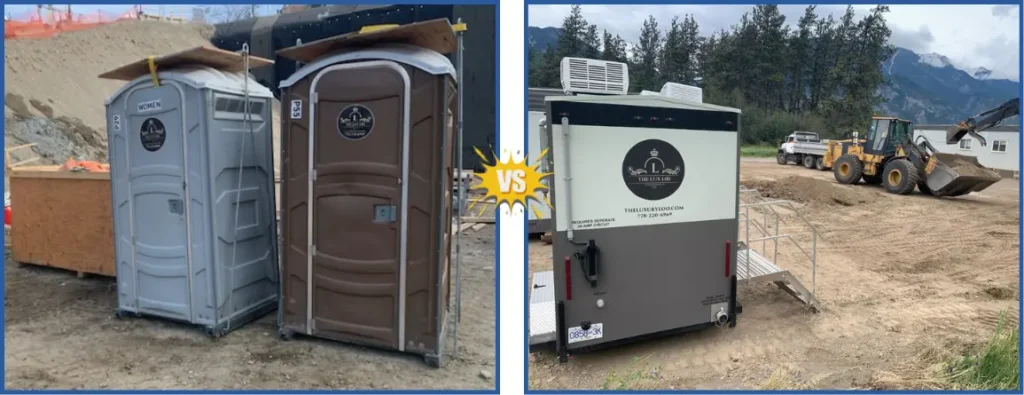
- The flush toilet vs. porta potty decision on a BC construction site isn’t just a comfort question — it’s a regulatory, logistical, and budget question, and the answer isn’t the same for every site.
- WorkSafeBC sets minimum sanitation requirements for construction sites, and most smaller or mid-size BC projects are well-served by standard porta potties — if they’re serviced properly.
- Flush toilet trailers make sense for longer projects, larger crews, or sites where client-facing optics matter. They cost more, but the gap is smaller than most contractors assume.
- The BC Interior’s freeze-thaw cycles and remote site access create real complications that coastal contractors don’t deal with — and they change the math on which option works.
- In our experience servicing jobsites across Kamloops, Merritt, Barriere, and the Thompson-Okanagan, the biggest sanitation mistake contractors make isn’t choosing the wrong unit — it’s underestimating how often it needs to be serviced.
If you’re a contractor in Kamloops or anywhere across the Thompson-Okanagan, the flush toilet vs. porta potty question on a BC construction site comes up more than you’d think — and not always before it becomes a problem. Usually it’s right before a project kicks off, when someone realizes they haven’t actually sorted out site sanitation yet, or mid-project when the crew starts complaining and someone from WorkSafeBC is expected on-site next week.
The honest answer is that there’s no universal right choice here. Both options can work. Both can fail. What makes the difference is matching the unit to your site size, your crew, your project length, and the specific conditions of doing construction work in BC’s Interior — where a porta potty that works fine in May can be a frozen mess by October. We’ve dropped units on sites across Kamloops, Chase, Merritt, Clearwater, and plenty of spots in between. Here’s what we actually see work, and what doesn’t.
What WorkSafeBC Actually Requires for Construction Site Sanitation
Before you decide what you want, it helps to know what you’re required to provide. WorkSafeBC’s occupational health and safety regulations set clear minimums for toilet facilities on construction sites, and ignoring them isn’t just a fine risk — it’s a liability risk if something goes wrong on-site.
Under WorkSafeBC OHS Regulation Part 4, employers must provide toilet facilities for workers. The number of toilets required scales with crew size — generally, one toilet for every 20 workers for a standard construction site. The facilities need to be kept clean and sanitary, located within a reasonable distance of the work area, and maintained in working condition throughout the project.
Critically, the regulation doesn’t specify porta potty vs. flush toilet. Both can satisfy the requirement. What it does specify is that whatever you provide has to actually work — which means a unit that hasn’t been pumped in six weeks, is tipping in the mud, or has no hand sanitizer doesn’t meet the standard even if it technically checks the “toilet present” box.
If you’re on a project where Interior Health or local municipal permits are involved — which happens more often on larger residential or commercial builds in the Kamloops area — there may be additional requirements on top of WorkSafeBC’s baseline. It’s worth confirming before you assume a single standard porta potty covers everything.
Where Porta Potties Actually Make Sense (And Where They Fall Short)
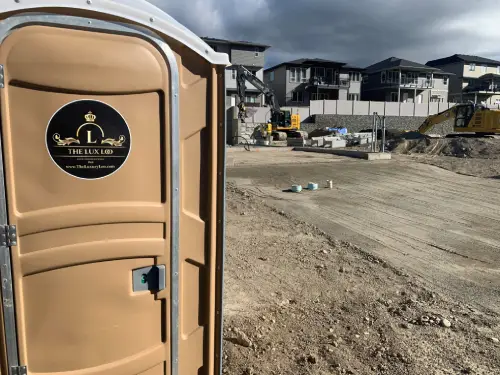
The standard porta potty gets a bad reputation that’s mostly earned by under-serviced units on poorly managed sites. A properly maintained porta potty — pumped on a regular schedule, stocked with hand sanitizer, sitting level on stable ground — does exactly what it’s supposed to do. For most short-to-medium-length projects with crews under 20 people, it’s genuinely the right call.
Here’s where porta potties win on BC construction sites:
- Lower upfront cost. Rental pricing is predictable and straightforward. If you’re running a four-to-six-week project near Vernon or Merritt, a standard unit with bi-weekly servicing fits neatly into your project budget without drama.
- Flexibility. They go where you need them. Tight lot line? Sloped lot? Rough access road? A standard porta potty can be placed in spots that a trailer unit simply can’t reach.
- No water or power hookup required. On remote sites — and there are plenty of those in the Thompson-Okanagan — a self-contained unit is the only practical option.
Where they fall short is on longer projects, in late-season cold, and anywhere optics matter. A six-month build where subcontractors and inspectors are rotating through regularly is a different situation than a six-week framing project. And in November in Kamloops, an unheated porta potty is… an experience. Not a good one.
The other failure point — and we see this constantly — is under-servicing. If you’ve got a crew of 12 hitting one unit hard all week and it only gets pumped once a month, you’re going to have a compliance problem before you have a comfort problem. For standard units, most active construction sites need servicing every one to two weeks minimum. Budget for that from the start.
You can get a straight look at what porta potty rental actually costs in the region over at our post on porta potty rental costs in Kamloops — it breaks down pricing in a way that actually helps you plan.
When a Flush Toilet Trailer Is Worth It on a BC Construction Site
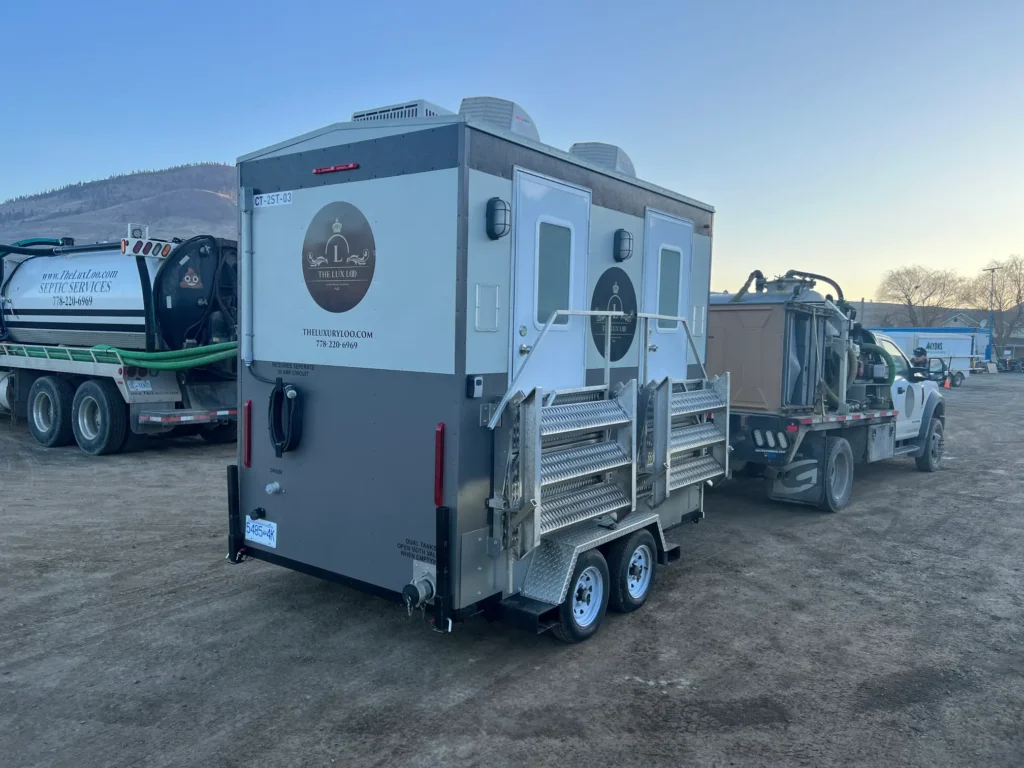
Flush toilet trailers — the kind with running water, a proper sink, and a real door that closes all the way — aren’t just for weddings and corporate events. We deploy them on construction sites more than most people realize, and in the right situation, they’re not as extravagant as they sound.
Here’s a real scenario from our experience: a general contractor running a large custom home build on the outskirts of Kamloops, 14-month timeline, crew size fluctuating between 15 and 30 depending on the phase. The GC had used standard porta potties on previous projects and was tired of the complaints, the servicing headaches, and — his words — “showing up to a site that smells like a festival parking lot.” He switched to a flush trailer mid-project. His feedback was that the subcontractor relationships genuinely improved. Trades who have a decent washroom show up in a better mood. That’s not a small thing on a long build.
Flush toilet trailers make the most sense when:
- Your project runs longer than three months
- You have a crew of 20 or more on-site regularly
- The site has power and water access, or can be set up with a holding tank
- Clients, inspectors, or the public will be on-site regularly
- You’re building through winter in the BC Interior and an unheated unit isn’t a realistic option
The cost gap between a porta potty rental and a flush trailer rental is real, but it narrows when you factor in frequent servicing costs on a high-use standard unit. On a long project, it’s worth running the actual numbers rather than assuming one is obviously cheaper.
BC Interior Conditions Change the Calculation — and Most People Don’t Account for It
This is the part of the flush toilet vs. porta potty conversation on BC construction sites that gets skipped when you’re reading generic advice written for someone in Southern Ontario. The Thompson-Okanagan is not the Lower Mainland. Winters here are real. Ground freezes. Access roads ice over. And the temperature swing between a July afternoon in Kamloops and a January morning is significant enough that what works for your summer project is not automatically what works for your fall or winter one.
A few BC Interior-specific realities that matter here:
Freeze risk in standard units. A porta potty that sits in -15°C overnight isn’t just unpleasant — the holding tank can freeze, which creates a servicing problem that costs more to solve than it would have to prevent. If your project runs past October, you need either a heated unit, a flush trailer with a properly winterized setup, or a very honest conversation with your rental provider about cold-weather operation.
Remote site access. A lot of construction in the Thompson-Okanagan happens on properties that aren’t exactly easy to get a service truck into in February. If your site has seasonal road access issues, factor in how often a service truck can realistically reach it. A flush trailer with a larger holding tank may need less frequent servicing than a standard unit, which matters when the alternative is a stuck pump truck on a logging road.
Summer heat. On the flip side, Kamloops summers are hot. A standard porta potty in direct sun in July is going to need more frequent servicing than the same unit in April. Heat accelerates breakdown in the holding tank and makes odour management a much bigger issue. It’s not the most glamorous consideration, but it’s a real one on a summer build site.
Our jobsite toilet rental service covers the Thompson-Okanagan year-round — including winter — and we’ll be straight with you about what setup actually makes sense for your site and your season.
How to Actually Make the Call for Your Specific Site
If you’re trying to decide right now, here’s the honest framework we’d walk you through if you called us:
Project under eight weeks, crew under 15, decent access for servicing? A standard porta potty with weekly or bi-weekly service is almost certainly your best option. Don’t overthink it. Just make sure it’s sized right and serviced on a real schedule, not whenever someone remembers to call.
Project over three months, larger crew, or running through winter? Get a quote on a flush trailer and compare the real numbers. The comfort improvement is significant, the compliance headaches go down, and on a long project the total cost difference is often less than contractors expect.
Remote site with limited access? That changes things regardless of project length. Talk to your rental provider about holding tank capacity, winterization, and realistic service frequency before you commit to either option.
Not sure what your crew size will be? Build in flexibility. It’s easier to add a unit than to manage an overloaded one. Under-providing on jobsite sanitation is one of those things that seems like a cost save right up until it creates a WorkSafeBC complaint or a crew morale problem that costs you a good subtrade.
At The Lux Loo, we’ve been servicing construction sites across Kamloops, Merritt, Chase, Barriere, and the wider Thompson-Okanagan since 2020. We’re not going to upsell you on a flush trailer if a standard unit is genuinely the right fit for your site — but we’re also not going to let you walk into a winter project with a setup that’s going to freeze solid in November and leave you in a bind.
The Bottom Line
The flush toilet vs. porta potty question on a BC construction site doesn’t have one right answer — but it does have better and worse answers depending on your specific project. Crew size, project length, season, site access, and client-facing optics all factor in. What doesn’t work is defaulting to whichever option seems cheaper upfront without thinking through the servicing costs, the winter conditions, and the WorkSafeBC requirements that apply to your site.
In our experience, the contractors who have the smoothest jobsite sanitation situations are the ones who sort it out before the project starts, budget for proper servicing frequency, and actually call us when conditions change — rather than waiting until there’s a problem.
If you’re planning a project in Kamloops or anywhere across the Thompson-Okanagan and want a straight answer on what makes sense for your site, give The Lux Loo a call. We’ll give you an honest recommendation and a free quote — no runaround, no upsell if you don’t need it.