
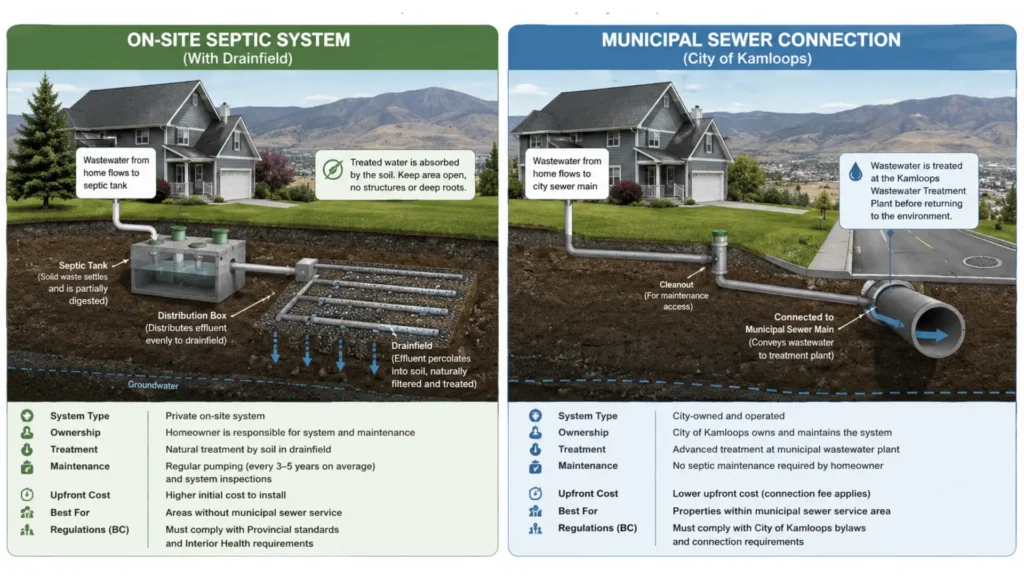
Septic System vs. Municipal Sewer in Kamloops — Which One Actually Makes Sense for Your Property?
Key Takeaways
- Most rural properties in the Thompson-Okanagan have no choice — septic is the only option, and a well-maintained system works just fine.
- Municipal sewer connection fees in Kamloops can run $10,000–$30,000+, so “switching” isn’t always the obvious win people expect.
- Septic systems require regular maintenance — pump every 3–5 years minimum — but they give rural homeowners independence from municipal infrastructure.
- BC’s Sewerage System Regulation sets strict standards for septic installation and maintenance. Ignoring them can affect your property sale.
- From our experience servicing hundreds of Kamloops and Thompson-Okanagan properties, most septic owners just need a consistent maintenance routine — not a $25,000 sewer hookup.
Introduction
Here’s a question we hear all the time at The Lux Loo: “Should I just connect to the city sewer and be done with it?” It usually comes up after a septic pump-out, or when someone’s buying a rural property near Kamloops and isn’t sure what they’re getting into. The septic system vs. municipal sewer Kamloops debate is real — and the answer isn’t as simple as “sewer is better.”
We’ve pumped and serviced septic tanks across the Thompson-Okanagan for years. Acreages near Westsyde, hobby farms in the South Thompson valley, rural properties outside Chase, Barriere, and Merritt. We’ve seen systems that have run perfectly for 30 years with basic maintenance. We’ve also seen systems that were neglected until the yard started telling the story. This post is going to give you an honest, BC-specific breakdown — no fluff, no sales pitch for one side or the other.
The Reality for Most Kamloops-Area Homeowners: You Don’t Have a Choice
Let’s start with the most important point. If your property is outside Kamloops city limits — or even in some areas within the city boundary — municipal sewer simply isn’t available to you. Full stop. The Thompson-Okanagan is a big region with a lot of rural land, and BC’s municipal sewer infrastructure doesn’t reach most of it.
If you’re on an acreage near Pritchard, a rural lot outside Logan Lake, or a property in the hills above Kamloops, your option is septic. That’s not a problem — it’s just reality. And honestly, a properly designed and maintained septic system on a rural BC property is a reliable, cost-effective solution. The issue isn’t the system. It’s usually the maintenance routine (or lack of one).
For homeowners who do have access to municipal sewer — typically within city boundaries in Kamloops, or in developed areas of Kelowna, Vernon, or Merritt — the question becomes whether connecting is worth it. And that’s where the math gets interesting.
Our honest take: If your septic system is in good shape and you’re not in a high-density area with soil or space limitations, staying on septic and maintaining it properly is almost always the smarter financial decision in the short-to-medium term.
The Real Cost of Connecting to Municipal Sewer in Kamloops
People often assume connecting to city sewer is the “upgrade.” And in some cases, it is. But the upfront cost surprises almost everyone.
In Kamloops, a residential sewer connection can cost anywhere from $10,000 to $30,000 or more, depending on how far your property sits from the main sewer line, whether excavation is needed across a road or easement, and what the City of Kamloops charges in connection fees at the time of application. That doesn’t include the cost of decommissioning your existing septic system, which BC regulations require to be done properly by a qualified professional.
Then there are the ongoing costs. Once you’re on municipal sewer, you pay a monthly utility fee — indefinitely. In Kamloops, sewer utility rates are tied to your water consumption and billed quarterly. For an average household, that adds up to several hundred dollars per year, every year, for as long as you own the property.
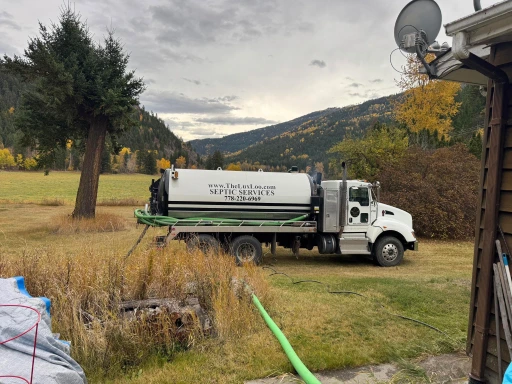
Compare that to a septic system: a pump-out every 3–5 years (typically $300–$500 in the Kamloops area through a service like The Lux Loo’s septic pumping service), occasional inspections, and sensible everyday habits. Over a 20-year period, the septic route is almost always cheaper for rural properties with adequate land.
If you want a deeper breakdown of what a new system actually costs, our post on What Is the Price of a Septic System in Kamloops? walks through the numbers in detail.
Where Municipal Sewer Actually Wins
We’re not here to talk you out of sewer connection if it genuinely makes sense for your situation. There are real scenarios where municipal sewer is the better call — and we’ll be straight with you about them.
Small lots with limited drainfield space. A septic system needs a properly sized drainfield (also called a leach field) to function correctly. BC’s Sewerage System Regulation under the BC Ministry of Water, Land and Resource Stewardship sets out minimum soil and lot requirements. If your property simply doesn’t have the space or soil conditions for a compliant drainfield, septic becomes complicated and expensive fast. In that case, connecting to sewer might be the only practical path.
Failing systems in areas where replacement is restricted. Some areas near Kamloops have development restrictions that limit what kind of septic system can be installed. If your current system is failing and the lot doesn’t support a full replacement, a municipal connection (if available) solves the problem cleanly.
High-density residential or strata developments. If you’re in a townhouse or strata situation where septic was always a temporary solution, connecting to sewer as the neighbourhood builds out is usually the intended end-state anyway.
Outside of these scenarios? Most Kamloops-area homeowners are better served by keeping their septic system running well.

What We See Most Often — A Real Kamloops Scenario
A homeowner in Westsyde called us a couple of years ago. They’d just bought a property with a 1,500-gallon concrete septic tank that hadn’t been pumped in at least eight years. The previous owners hadn’t kept records, the tank was well past due, and there were early signs that solids were starting to move toward the drainfield. Not a full failure — but close.
They’d been quoted $22,000 to connect to city sewer by a contractor who suggested it was “easier than fixing the septic.” We pumped the tank, inspected it, found the concrete was still in solid shape, and recommended they get on a regular 3-year pumping schedule. Total cost that day: a few hundred dollars. The system has been running fine since.
That story isn’t unusual. The number one issue we see with septic systems in the Thompson-Okanagan isn’t a design flaw or a failing tank — it’s deferred maintenance. Pumping is the single most important thing you can do, and most homeowners wait too long between service calls.
If you’re not sure what your system actually needs, our detailed guide on What Maintenance Does a Septic System Need? is a good starting point.
BC Regulations You Need to Know Before You Decide
This is where a lot of homeowners get caught off guard — especially during a property sale.
In BC, septic systems are governed by the Sewerage System Regulation (BC Reg. 129/2011). This regulation requires that any new or replacement septic system be designed and inspected by a Registered Onsite Wastewater Practitioner (ROWP). It also sets out maintenance requirements that, if ignored, can create real problems when you go to sell your property. A home inspector flagging a septic system that’s never been pumped or documented is a negotiating nightmare — we’ve heard that story more than once.
If you’re on a First Nations reserve or in a rural area under Interior Health Authority jurisdiction, the requirements may be administered slightly differently, but the principles are the same: your system needs to be compliant, documented, and maintained.
Municipal sewer sidesteps all of this, which is one genuine advantage — once you’re connected, you’re not responsible for the treatment side of the equation. But for the vast majority of rural Thompson-Okanagan homeowners, staying compliant with your septic system is far simpler than most people assume. You pump it, you don’t pour grease or harsh chemicals down the drain, and you get it inspected if something seems off. That’s most of it.
Conclusion
So — septic system vs. municipal sewer in Kamloops? Here’s our honest answer after years of servicing properties across the region: if you have a functioning septic system and a rural or semi-rural property, maintain it and keep your money. A properly maintained system will serve you for decades. The sewer connection might feel like the “city upgrade,” but it comes with a price tag that rarely pencils out for most Thompson-Okanagan homeowners.
If you’re unsure about the condition of your current system, or you’ve just bought a property and have no idea when it was last pumped, that’s where we come in. At The Lux Loo, we make septic tank pumping and cleaning straightforward and stress-free — no jargon, no pressure, just honest service from a team that knows the Kamloops area inside out.
Give us a call or request a free quote today. We’ll tell you exactly what your system needs — and just as importantly, what it doesn’t.