Key Takeaways
- Most Kamloops restaurants need their grease trap cleaned every 1 to 3 months — not once a year
- Interior Health inspectors can shut you down for a blocked or overflowing grease trap
- High-volume kitchens (think burger joints, fish and chip spots, or brunch-heavy cafés) need more frequent service than light-use operations
- The “one-quarter rule” is the industry standard for knowing when your trap is full — we’ll explain it below
- Skipping cleanings doesn’t save money. It costs far more when you’re dealing with a backup, a failed inspection, or a plumbing bill
Introduction
If you’re running a restaurant, café, food truck, or commercial kitchen in Kamloops, grease trap cleaning frequency isn’t something you can afford to guess at. The right answer isn’t once a year. It’s not even twice a year for most operations. And yet, we hear that all the time when we show up to service a trap that hasn’t been touched in 14 months — and looks like it. At The Lux Loo, we service grease traps across Kamloops and the Thompson-Okanagan, and we’ve seen what happens when restaurants push their luck. A neglected grease trap doesn’t just smell bad (though it really does smell bad). It backs up into your kitchen, triggers Interior Health violations, and can get your restaurant temporarily closed. This guide gives you the real-world grease trap cleaning frequency you need for your type of kitchen — based on BC health code requirements and what we actually see on the job.What Does BC Health Code Actually Say About Grease Traps?
Let’s start with the authority on this. BC’s Food Premises Regulation (B.C. Reg. 210/99) requires that all commercial food premises maintain their drainage systems — including grease interceptors — in good working order. Interior Health, which oversees food safety inspections across Kamloops and the Thompson-Okanagan, expects grease traps to be cleaned before they reach capacity. That means before grease, oil, and food solids start escaping into the drain line. There’s no regulation that says “clean your trap every 90 days.” What the regulation says, effectively, is: keep it working. Interior Health inspectors will check your trap during routine inspections, and a trap that’s at or over capacity is a clear violation. The practical interpretation used by most environmental health officers in our region: clean it often enough that it never backs up or overflows. For the majority of Kamloops restaurants, that means quarterly at minimum. One thing worth knowing — if you discharge into the municipal sewer system, the City of Kamloops also has sewer use bylaws that prohibit excess fats, oils, and grease (FOG) from entering the system. A blocked municipal line traced back to your restaurant is a whole different conversation, and not a cheap one.The One-Quarter Rule: How to Know When Your Trap Is Full
The industry standard — and the one we use at The Lux Loo — is the one-quarter rule. Your grease trap needs to be pumped when the combined depth of the floating grease layer and the settled solids layer equals 25% or more of the trap’s total liquid depth. Once you hit that threshold, the trap is no longer intercepting effectively. Grease starts passing through into your drain line. Here’s what that looks like in practice. Say your restaurant has a 500-litre grease interceptor under your prep sink area. When you add up the grease floating on top and the sludge sitting on the bottom, if that total is 125 litres or more — you’re at capacity. At that point, you’re not trapping grease anymore. You’re just letting it flow through. The honest reason most restaurant owners don’t follow this rule? They don’t check their trap. It’s under a floor plate in the kitchen, it smells terrible when you open it, and it’s easy to put off. We get it. But a quick visual check every few weeks takes about two minutes and can save you thousands. Better yet, set up a regular service schedule with us and you won’t have to think about it at all. That’s what most of our restaurant clients across Kamloops do.Grease Trap Cleaning Frequency by Restaurant Type (Kamloops Context)
Not all kitchens produce grease at the same rate. Here’s how we break it down for our clients in Kamloops and the surrounding area: High-volume, high-grease kitchens (burger restaurants, pubs, fish and chips, breakfast-heavy cafés): Every 4 to 6 weeks. We service a well-known Kamloops breakfast spot that goes through more butter and bacon grease before noon than most restaurants see in a week. Their trap fills up fast, and they’re on a monthly schedule because of it. Mid-volume kitchens (pizza, pasta, casual dining, food trucks): Every 6 to 8 weeks. This is the most common category we see in the Thompson-Okanagan. Most of these operations do well on a 6-week rotation. Lower-volume or lighter kitchens (salad-focused cafés, juice bars, catering prep kitchens with limited frying): Every 3 months. Even these kitchens need quarterly service — not annually. Grease builds up even when you think it shouldn’t. Seasonal businesses (summer-only food trucks, festival vendors, winery bistros): Service before opening, mid-season, and before winterizing. If you’re running a food operation at one of the Okanagan wineries during the summer crush, don’t wait until the season ends to deal with a trap that’s been running all summer.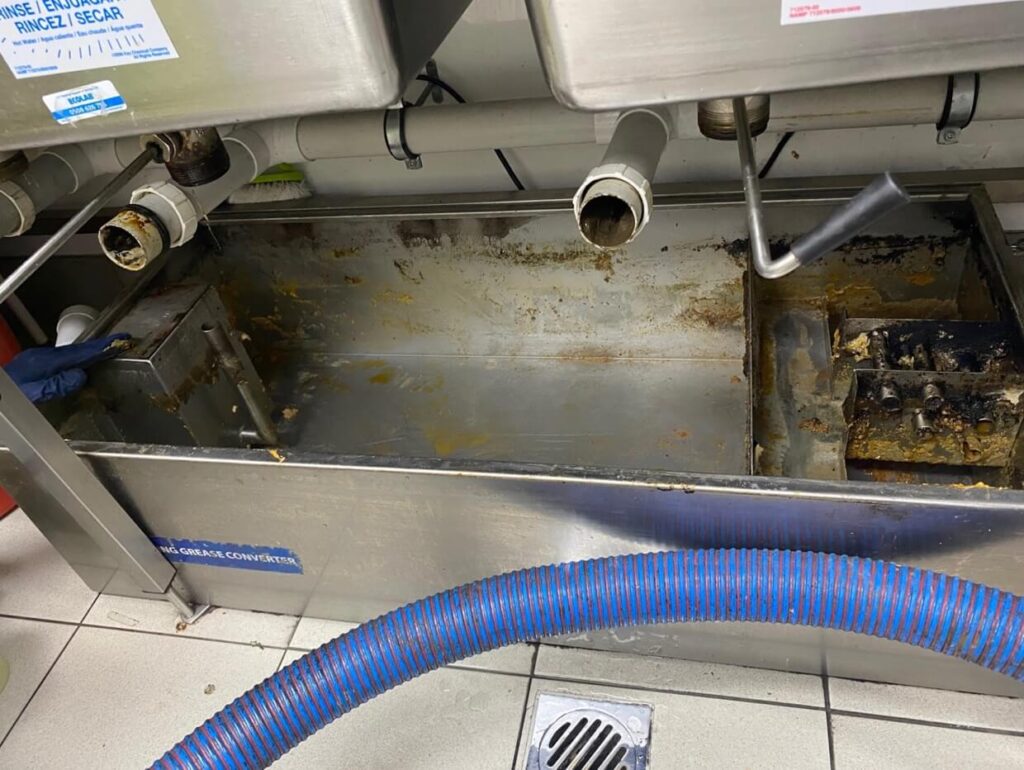
What Happens When You Skip Grease Trap Cleaning (Real Scenario)
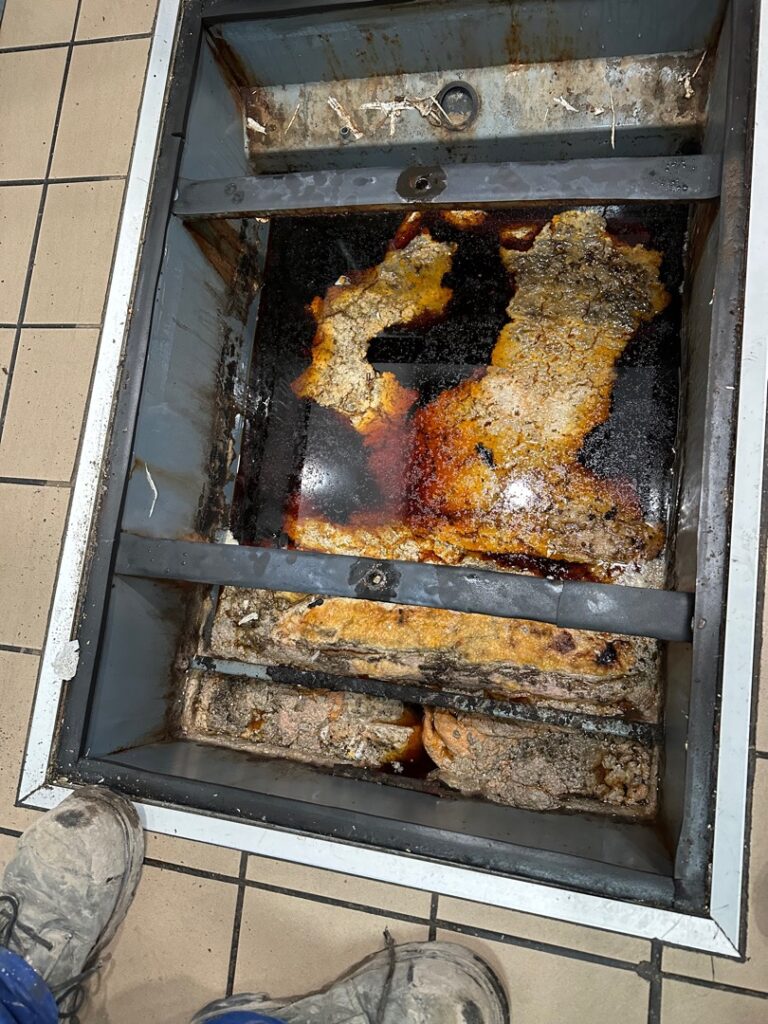
We’ll be honest with you because we think you deserve a straight answer rather than a sales pitch. Last year, we got a call from a mid-sized restaurant in Kamloops that hadn’t serviced their grease trap in over a year. They’d had a slow drain for a while, figured it was nothing, and kept going. Then their floor drain backed up mid-service on a Saturday night — raw sewage and grease water on the kitchen floor, customers in the dining room, and a kitchen they had to shut down immediately. By the time we arrived, the grease had hardened into a near-solid mass inside the trap and partially down the drain line. That cleanup took significantly longer than a standard pump-out, and they needed a plumber for the drain line on top of our service. The total cost was several times what routine quarterly cleaning would have been. They’re on a 6-week schedule with us now. Interior Health violations are also no joke. A failed inspection over a grease trap issue can mean a temporary closure order, a required re-inspection, and a public record of the violation. For a restaurant in a mid-sized city like Kamloops where word travels fast, that’s a reputation hit you don’t need.